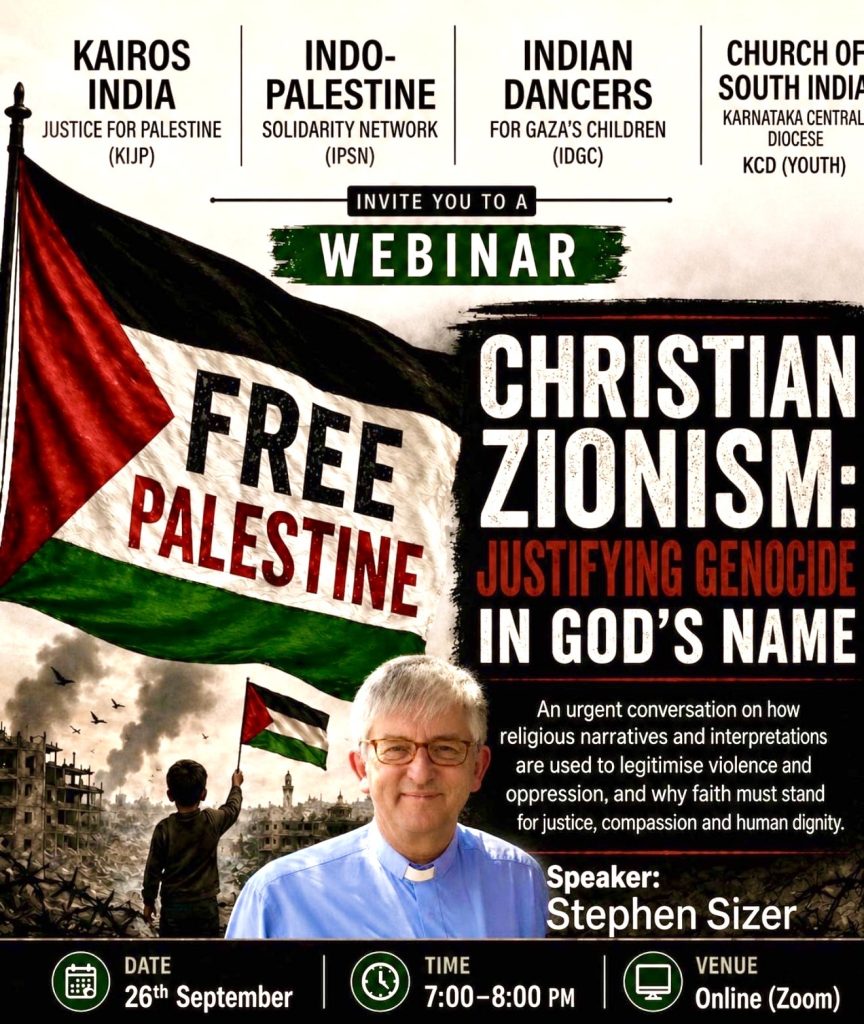
You can now view my presentation, Christian Zionism: Justifying Genocide in God’s name, a webinar organised by Kairos India Justice for Palestine (KJIP), Indo-Palestine Solidarity Network (IPSN), Indian Dancers for Gaza’s Children (IDGC) and Church of South India-Karnataka Central Diocese (KCD Youth) on Saturday, 26th September 2026 from 7-8PM Mumbai, Kolkata, New Delhi.
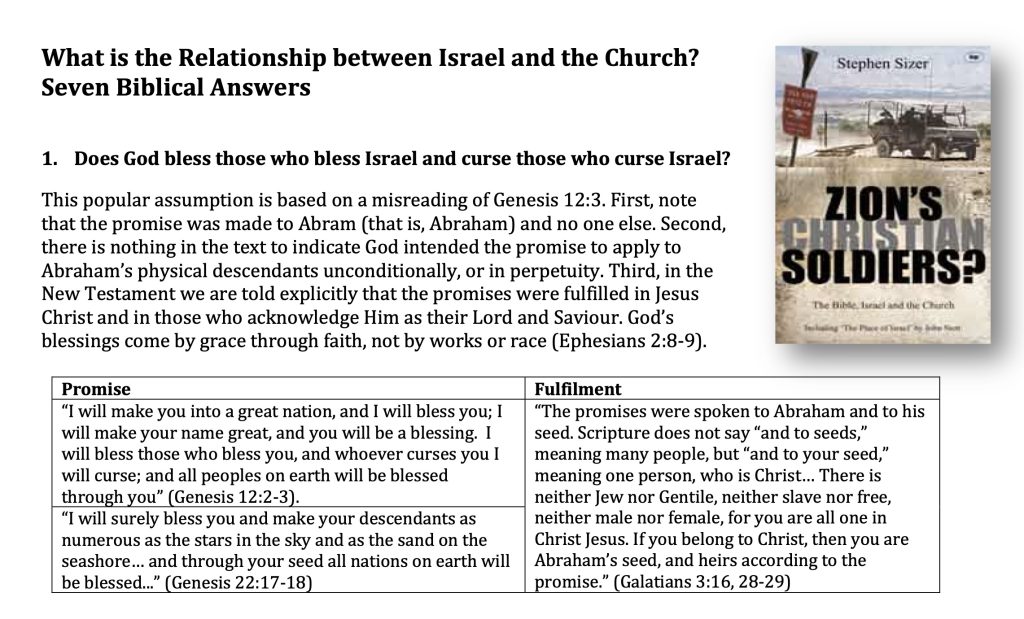
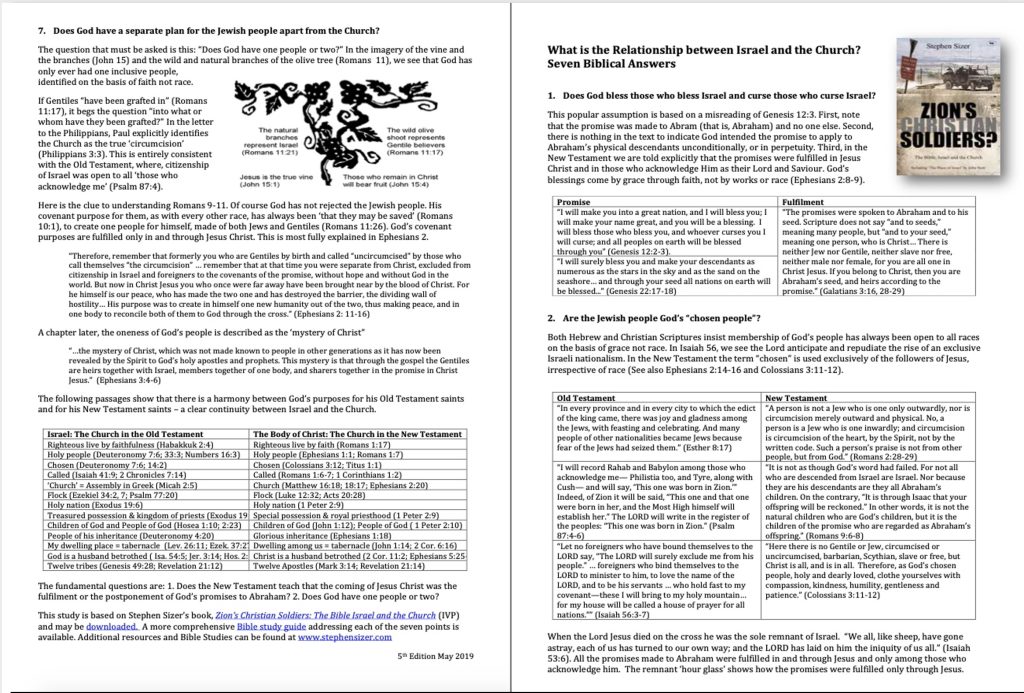
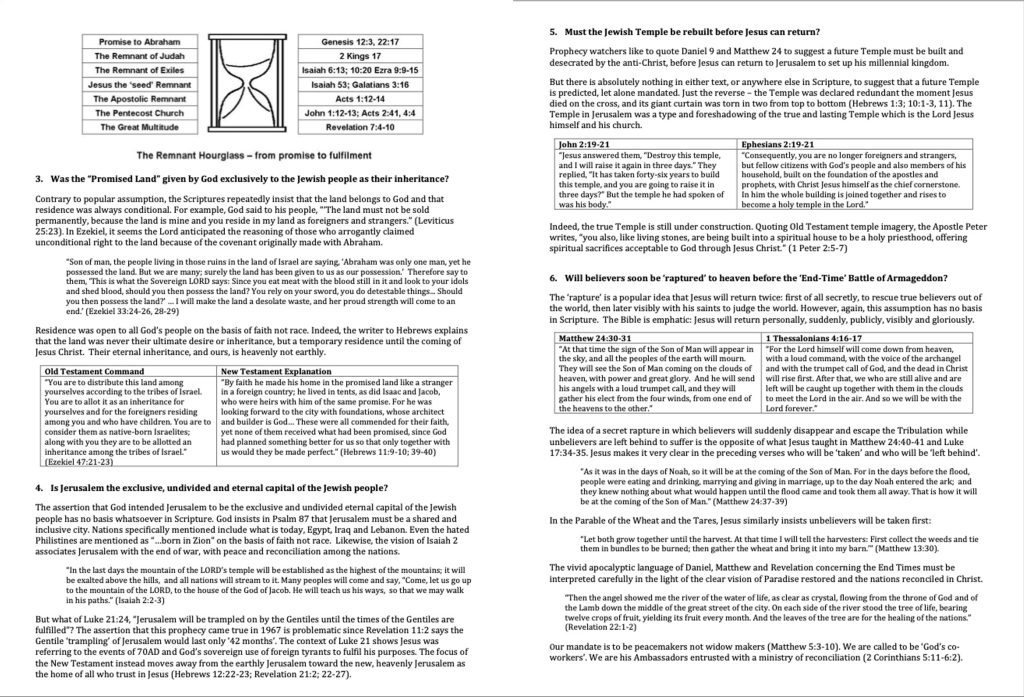
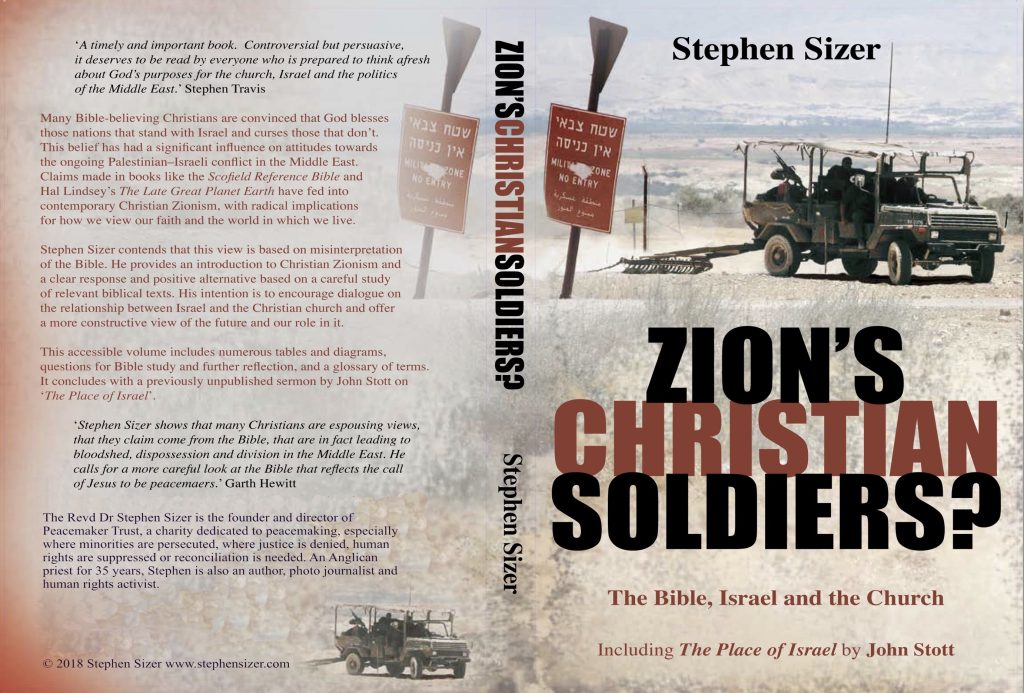
What is the biblical relationship between Israel and the Church? In these seven short videos we will refute the most common assertions made by Christian Zionists. These are based on my book Zion’s Christian Soldiers.
There is a printable outline of these seven short videos here:
“It is not an understatement to say that what is at stake is our understanding of the gospel, the centrality of the cross, the role of the church, and the nature of our missionary mandate, not least, to the beloved Jewish people. If we don’t see Jesus at the heart of the Hebrew scriptures, and the continuity between his Old Testament and New Testament saints in the one inclusive Church, we’re not reading them correctly. The key question is this “Was the coming of Jesus and the birth of the Church the fulfilment or the postponement of the promises God made to Abraham?” Christian Zionists see the promises of identity, land and destiny as part of an ongoing covenant God has with the Jewish people. In this book I unpack this question and show that Christian Zionism is a recent manifestation of a heresy refuted by the New Testament.”
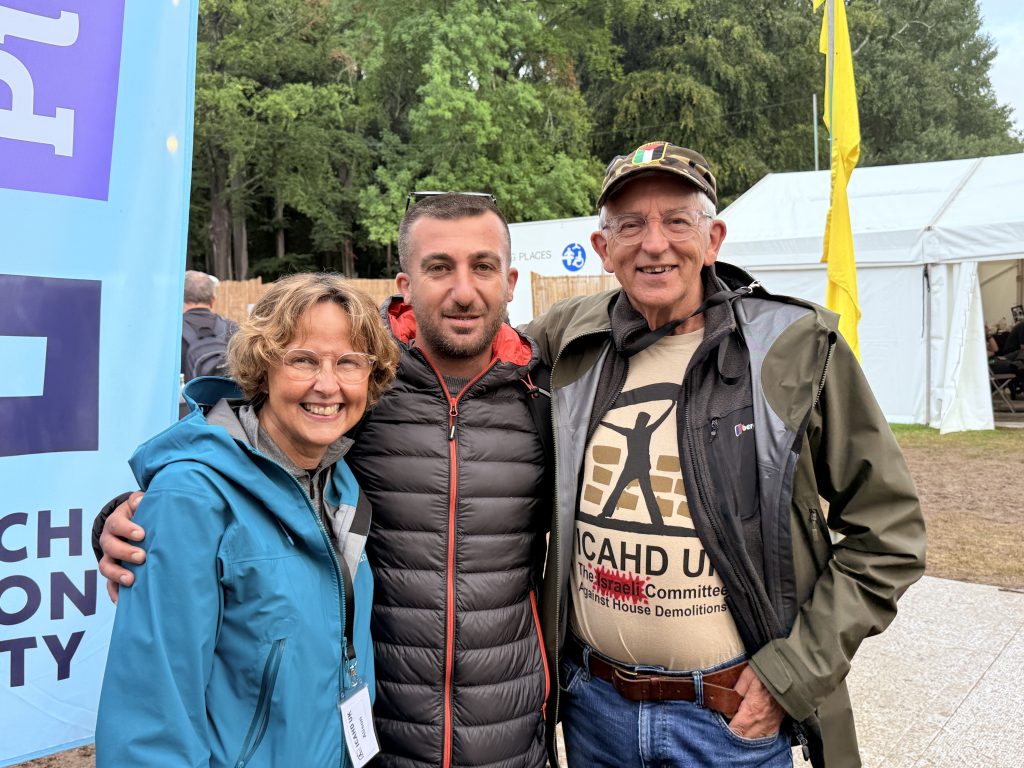
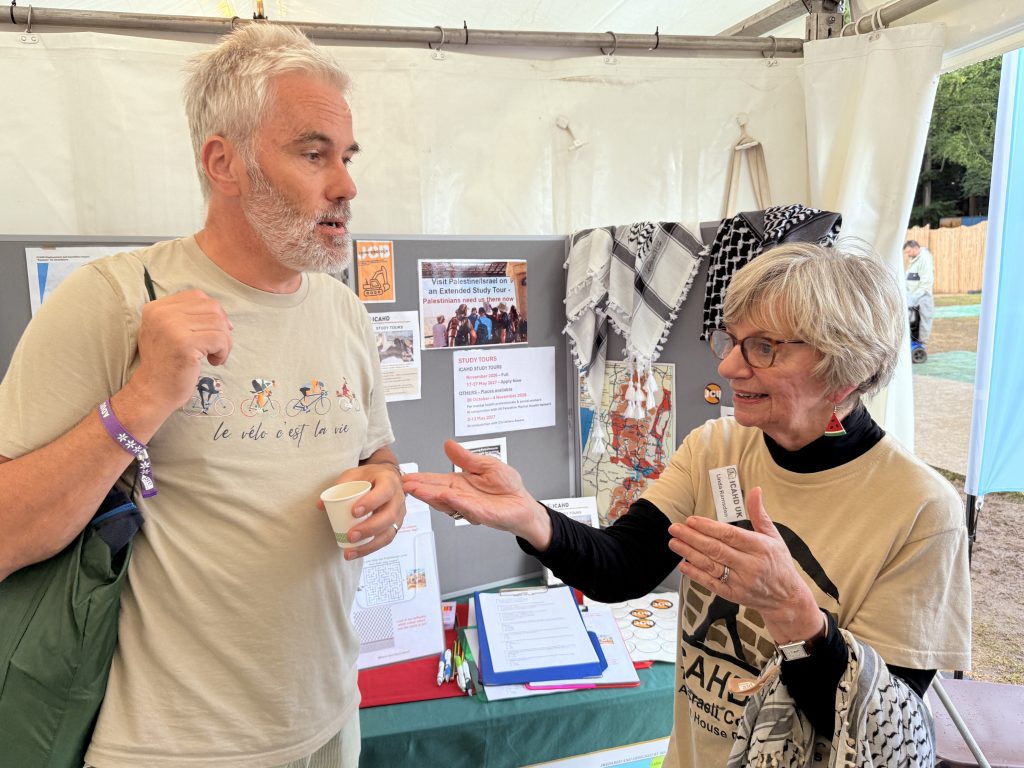
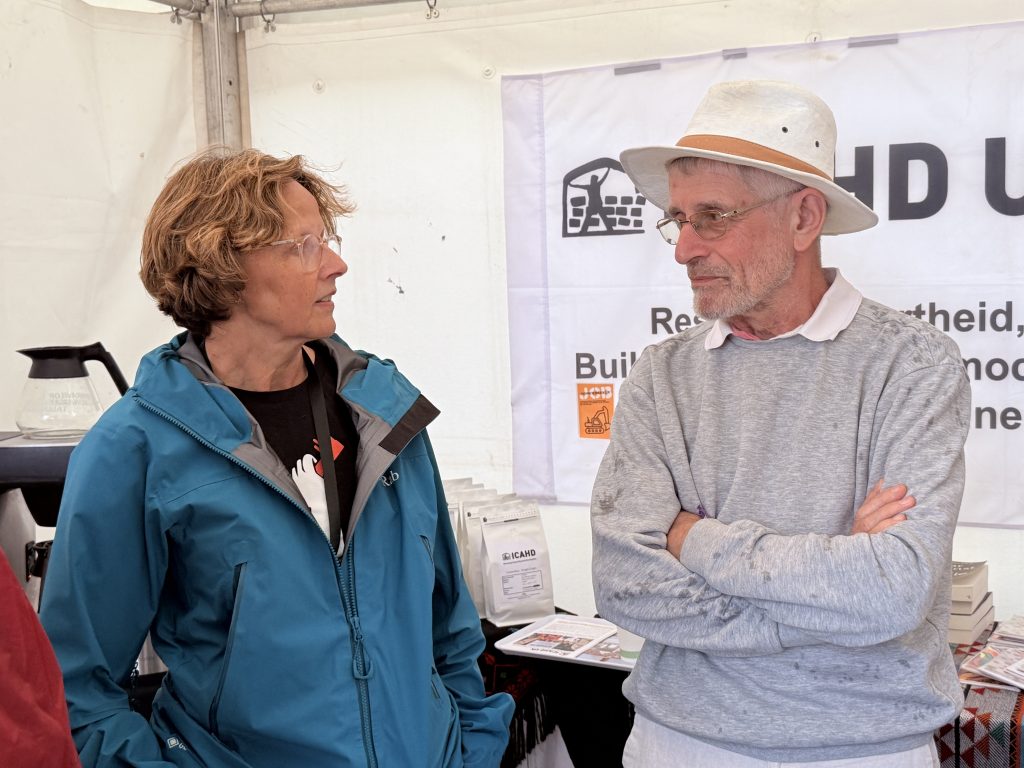
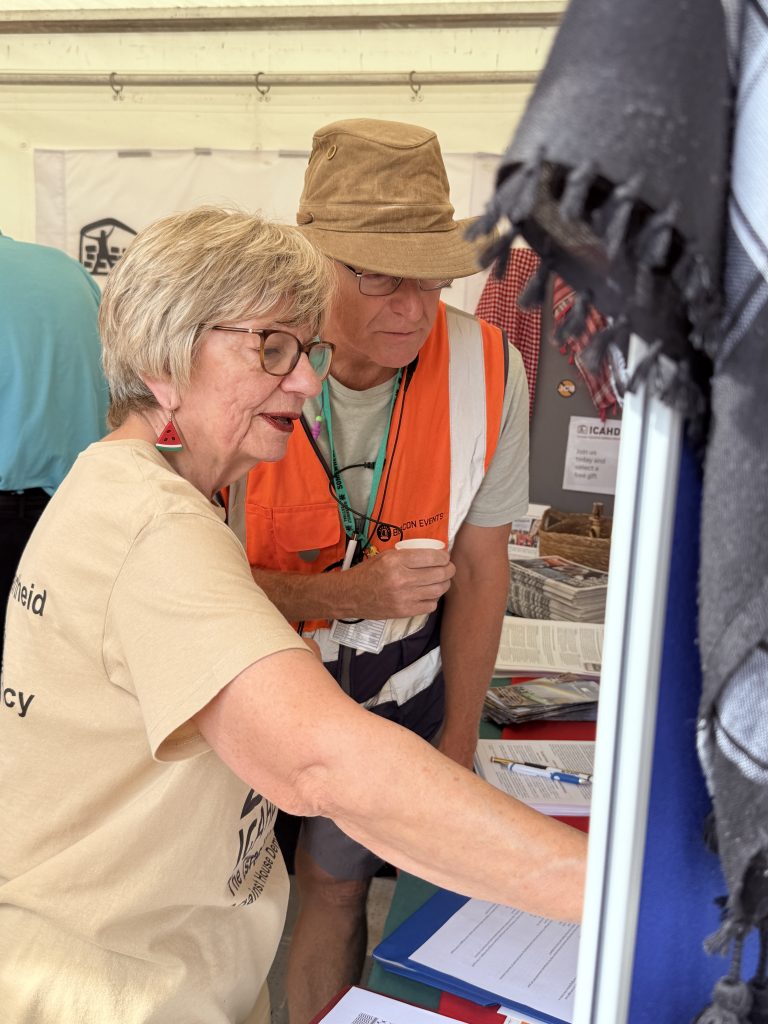
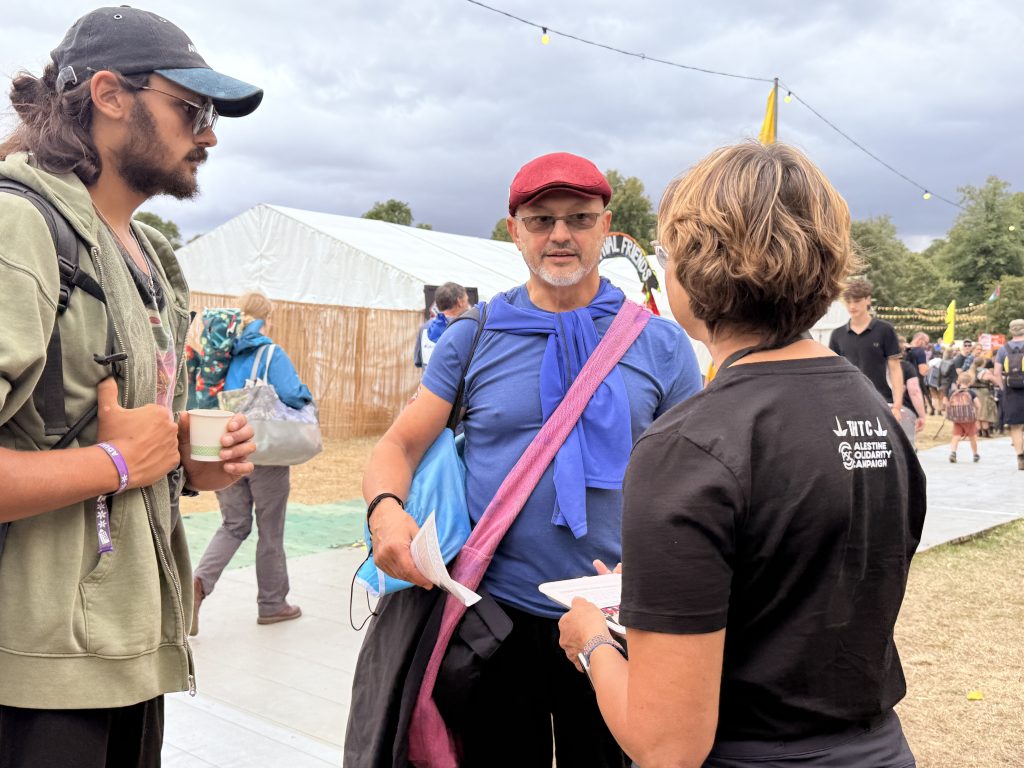
Delighted to have helped promote ICAHD at Greenbelt this year. ICAHD stands for the International Coalition Against House Demolitions – challenging Israeli apartheid and building a shared democracy in Palestine.
This episode of “The Story” delves into the rest of the file on Christian Zionism, its theological roots, and its impact on the Palestinian-Israeli conflict. It also reveals the contradictions within this ideology and how it is exploited to justify extremist political agendas. What is its influence on American policies? And how has it contributed to justifying Israel’s actions against the Palestinian people? Presented by: Fairouz Ziani
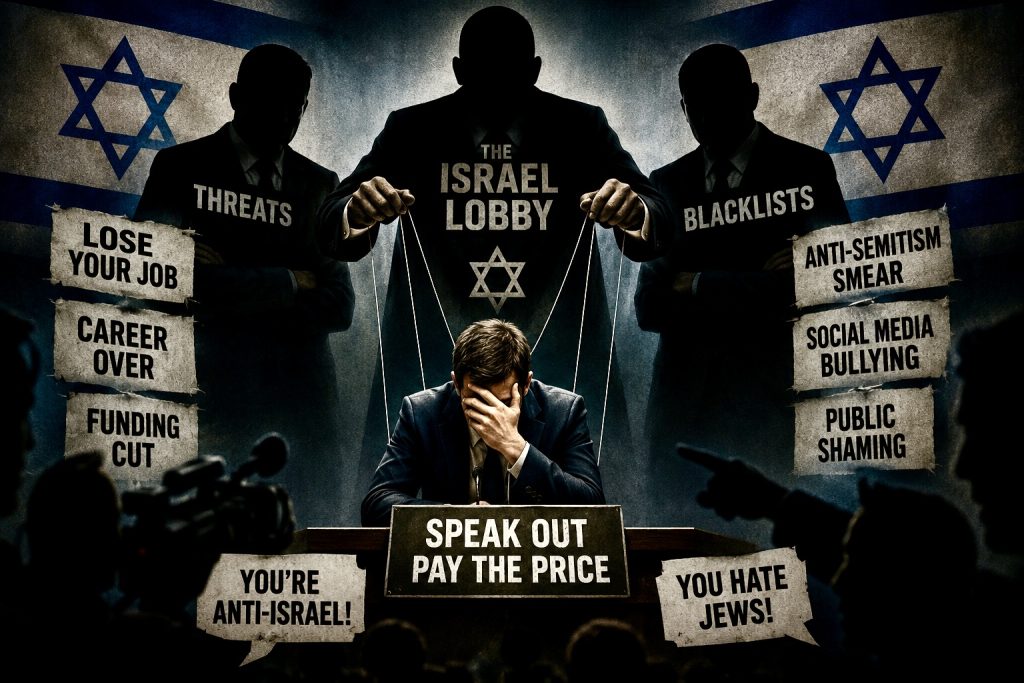
Five strategies used by the Israel Lobby to silence critics. Over the last 30 years I have experienced the first four.
1. Infiltration They will begin by befriending you, offer to connect you, fund you, even invite you to an all-expenses paid trip to Israel, in order to bring you on-side. If that doesn’t work, they will move to level 2.
2. Intimidation If they don’t like what you are saying or writing, they will bombard you with emails, letters and phone calls – even anonymously. They will put you on the defensive to shut you up. They will intimidate you with accusations of anti-semitism, holocaust denial, terrorism, etc. They will draft critical articles about you and send to sympathetic journalists to publish, especially the Jewish Chronicle. If it doesn’t cause paranoia, I recommend you set up a ‘Google Alert’ on your name so that you are sent links whenever your name appears on the Internet. If that doesn’t work, they will move to level 3.
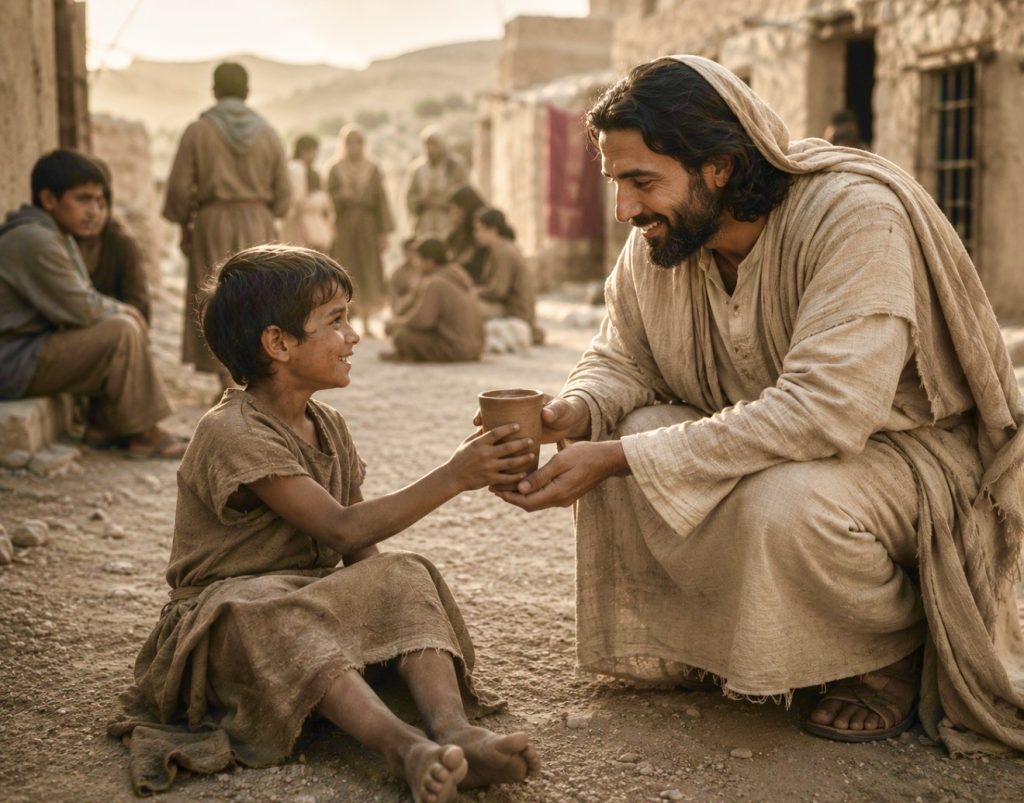
“Anyone who welcomes you welcomes me, and anyone who welcomes me welcomes the one who sent me. Whoever welcomes a prophet as a prophet will receive a prophet’s reward, and whoever welcomes a righteous person as a righteous person will receive a righteous person’s reward. And if anyone gives even a cup of cold water to one of these little ones who is my disciple, truly I tell you, that person will certainly not lose their reward.” (Matthew 10:40-42)
In today’s Gospel, Jesus says: “Anyone who welcomes you welcomes me,and anyone who welcomes me welcomes the one who sent me.”
These are remarkable words. Jesus literally identifies himself with his disciples. To welcome one of Christ’s followers is to welcome Almighty God himself. They remind us that God is not distant from human suffering but is present among those who bear witness to his kingdom.
Jesus speaks these words as he sends his disciples into a world that will not always welcome them. Some will reject them, denigrate them, and even persecute them. Yet Jesus assures that those who receive them are receiving Christ himself.
This is a profound affirmation of dignity. In Palestine where many feel ignored by the international community, forgotten by powerful nations, or reduced to mere statistics, Jesus declares that those who belong to him are never invisible. Christ so identifies with his followers that by welcoming them we are literally welcoming him.
This truth has both a comfort and a challenge.
Throughout the Gospel, Jesus identifies himself with those whom society overlooks. He was born under foreign military occupation. His family became refugees hiding in Egypt. He grew up among ordinary people far from the centres of power.
When Jesus says, “Whoever welcomes you welcomes me,” he reveals a God who is found not primarily in palaces or military headquarters but in villages and towns struggling to exist; among families mourning loved ones; among those working for peace and justice; among those refusing to surrender their humanity, emigrate or deny their faith. The Gospel challenges the world to recognize Christ in those it is tempted to ignore, and Jesus uses the imagery of a cup of cold water to rebuke those indifferent to or responsible for human suffering.
“Whoever gives even a cup of cold water to one of these little ones… will certainly not lose their reward.”
Giving someone a cup of cold water is a simple act but it can save a life. It does not solve every problem. It does not end wars or dismantle systems of injustice. Yet Jesus elevates such acts because they express and reveal the heart of God.
Palestinian society has long been known for hospitality. Even in difficult economic circumstances, guests are welcomed, meals are shared, and neighbours support one another. Jesus teaches that these ordinary acts of kindness are sacred. They are signs that God’s kingdom is already breaking into the world.
When resources are scarce, generosity becomes even more significant.
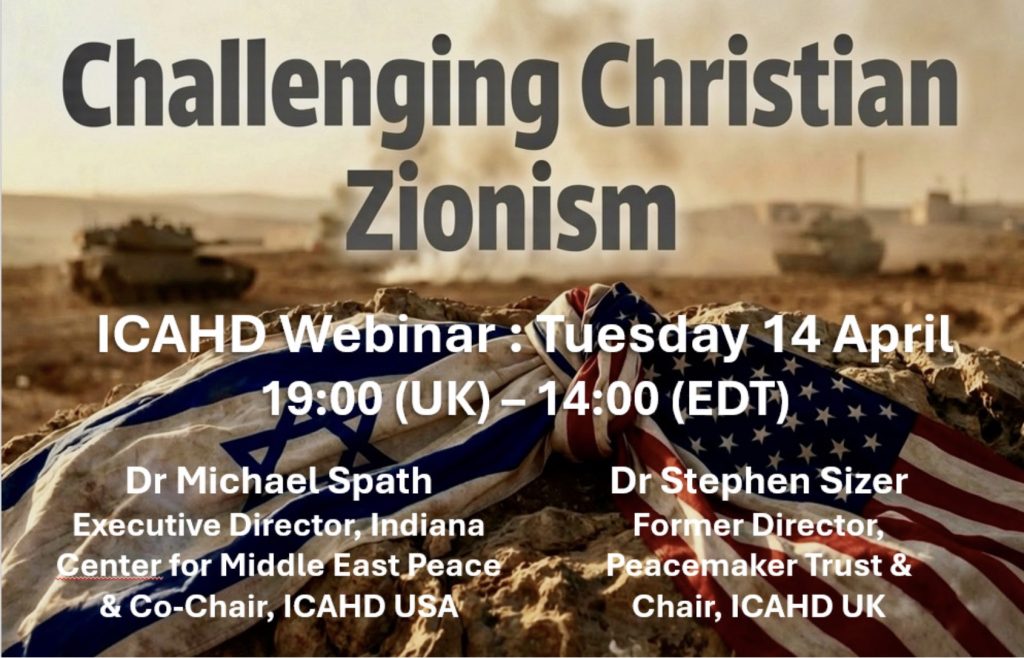
This webinar addresses how the US administration is embracing Christian Zionism and “end time” theology to justify unconditional support for Israel and unprovoked war against Iran.
The continuation of war crimes committed by Israel in Gaza and the West Bank, now spreading to Lebanon, Pete Hegseth’s transformation of Pentagon into a Holy War Department, and the White House becoming a war cheering prayer house – all of those are necessitating a thorough conversation on the issues of Christian Zionism, dispensationalism, Christian nationalism, antisemitism and bad theologies that inspire the escalation of growing chaos and confusion in the US and the Middle East.
For that purpose we have updated several recent interviews with Rev Dr Stephen Sizer and created four 30-minute features. In the part one we are setting a stage for better understanding of Christian Zionism today by asking questions such as: How did we get here? Is the modern-day State of Israel a fulfillment of Biblical prophecy?
Rev Stephen Sizer said: “Ironically, it was Christians who sponsored and facilitated Zionism. Christian Zionism is simply Christian support for Zionism, but it preceded Jewish Zionism by at least 50 years. And today, nine out of 10 Zionists in the world are Christians. So Zionism is predominantly a Christian heresy. It’s a bit like saying, I’m a Christian racist. You can be a Christian or a racist, but you can’t be both. You can be a Christian or a Zionist, but you can’t be a Christian Zionist because Zionism is synonymous with supremacism, racism, apartheid. And that’s only been achieved through the use of military force, by ethnic cleansing, by expelling people off their land, demolishing their homes, forcing them to live as a subjugated people in an apartheid state. That’s what Israel is today. So, it’s anathema from my perspective that Christians would even dream of supporting such a monstrous creation.”
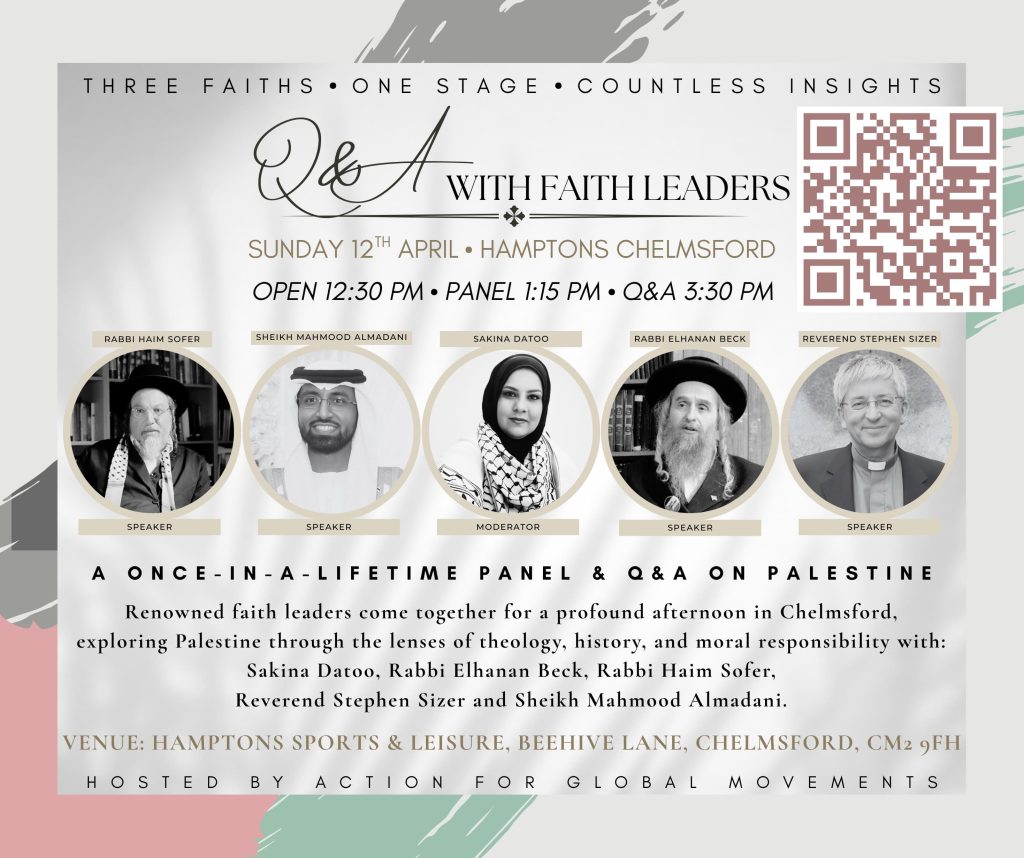
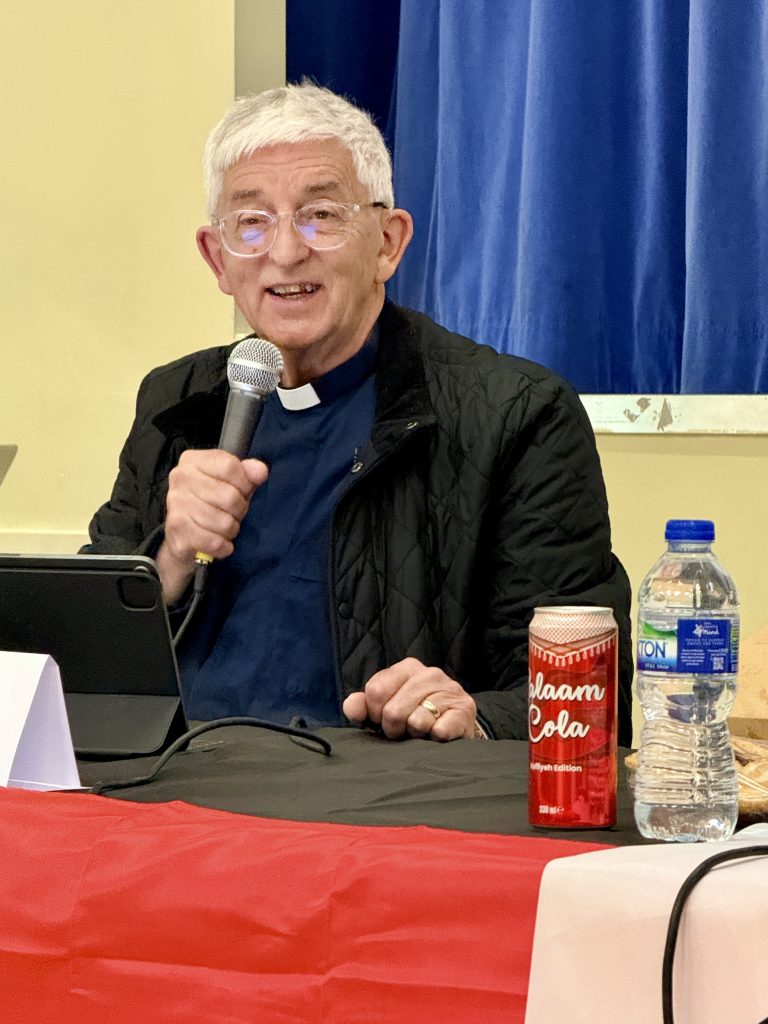
“Three Faiths. One Stage. Countless Insights.”A once in a lifetime interfaith panel discussion and Q&A on Palestine. Chelmsford Multifaith Panel
Here is a summary of my presentation:
How do colonial narratives weaponize religion as a pretext for waging war and genocide?
Colonial narratives, especially European, have often used religion as moral cover to justify conquest, exploitation, and even genocide as righteous, necessary, or divinely sanctioned. This “weaponization” works through a few recurring patterns – and I am going to focus in particular on the way Christian Zionists have weaponised religion as a pretext for waging war and genocide.
1. Moral Legitimization of Violence
Colonizers invariably present war as a ‘holy duty’ rather than a political or economic project. By claiming divine approval, violence becomes framed as obedience to God rather than human greed or emnity.
At the first of what have become monthly Christian worship services at the US Department of Defence, the personal pastor of the US defence secretary, Pete Hegseth, delivered a sermon at the Pentagon. Citing the words of Jesus from Matthew 10, Potteiger told the gathered leaders of the US military: “If our Lord is sovereign even over the sparrow’s fallings, you can be assured that he is sovereign over everything else that falls in this world, including Tomahawk and Minuteman missiles …“Jesus has the final say over all of it.”
Claiming to be a Christian, Hegseth has persisted in framing the war in Iran… as divinely sanctioned, repeatedly invoking “God’s almighty providence” and expressing certainty that God is on the side of the US military.[1]
When you think of ‘membership’ what comes to mind? It probably depends on how exclusive or expensive the membership is, or how badly we want it. There are arts societies, sport associations, health clubs, university alumni and professional bodies. The list of ‘memberships’ is endless, and your wallet is probably full of plastic to prove it. Some memberships are open to anyone who can pay the fee while others are exclusive and by ‘invitation only’. For many people, their membership provides a rich social life in which friendships and common interests can be pursued and shared. What may surprise you, however, is to discover that ‘membership’ is a Christian word. It appears in the Bible to describe how we become members of God’s family. The apostle Paul writes,
“For just as each of us has one body with many members, and these members do not all have the same function, so in Christ we, though many, form one body, and each member belongs to all the others.” (Romans 12:4-5)