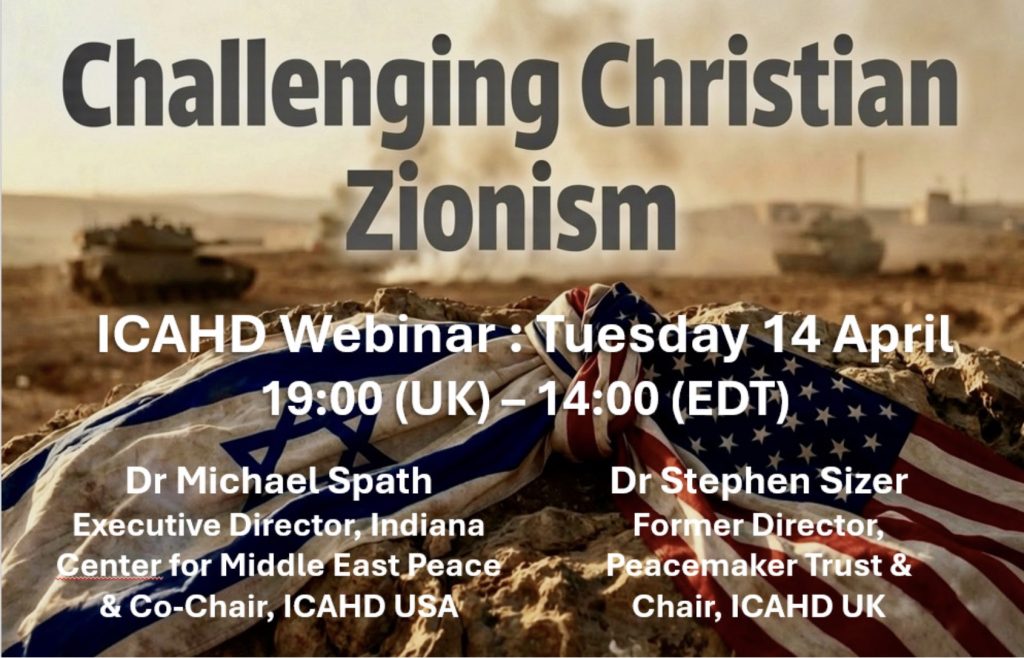
This webinar addresses how the US administration is embracing Christian Zionism and “end time” theology to justify unconditional support for Israel and unprovoked war against Iran.
The continuation of war crimes committed by Israel in Gaza and the West Bank, now spreading to Lebanon, Pete Hegseth’s transformation of Pentagon into a Holy War Department, and the White House becoming a war cheering prayer house – all of those are necessitating a thorough conversation on the issues of Christian Zionism, dispensationalism, Christian nationalism, antisemitism and bad theologies that inspire the escalation of growing chaos and confusion in the US and the Middle East.
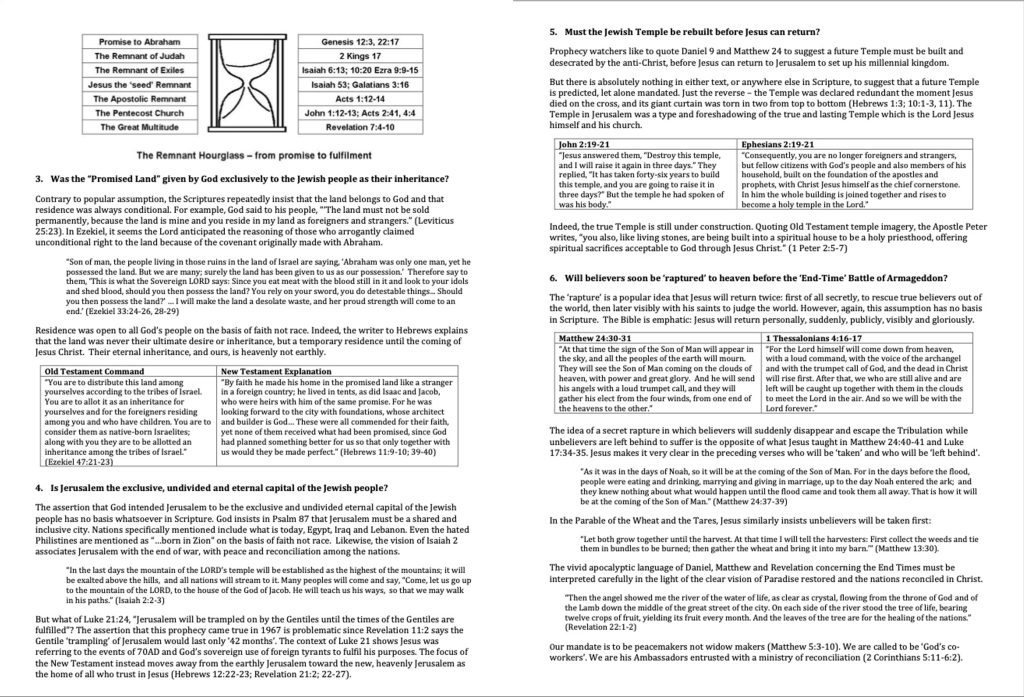
For that purpose we have updated several recent interviews with Rev Dr Stephen Sizer and created four 30-minute features. In the part one we are setting a stage for better understanding of Christian Zionism today by asking questions such as: How did we get here? Is the modern-day State of Israel a fulfillment of Biblical prophecy?
Rev Stephen Sizer said: “Ironically, it was Christians who sponsored and facilitated Zionism. Christian Zionism is simply Christian support for Zionism, but it preceded Jewish Zionism by at least 50 years. And today, nine out of 10 Zionists in the world are Christians. So Zionism is predominantly a Christian heresy. It’s a bit like saying, I’m a Christian racist. You can be a Christian or a racist, but you can’t be both. You can be a Christian or a Zionist, but you can’t be a Christian Zionist because Zionism is synonymous with supremacism, racism, apartheid. And that’s only been achieved through the use of military force, by ethnic cleansing, by expelling people off their land, demolishing their homes, forcing them to live as a subjugated people in an apartheid state. That’s what Israel is today. So, it’s anathema from my perspective that Christians would even dream of supporting such a monstrous creation.”
This webinar will address how the US administration is embracing Christian Zionism and “end time” theology to justify unconditional support for Israel and unprovoked war against Iran.
Some Americans have referred to what it is doing in Iran as the US’s “Holy War”. Mike Huckebee, the US’s Ambassador to Israel, remarked in February that it would be fine if Israel took control of land that would include a huge swathe of the Middle East.
Such positions come from an interpretation of Bible verses identified as Christian Zionism. This theological and political belief system says that the modern State of Israel’s existence is a fulfilment of biblical prophecy and a necessary sign to the Second Coming of Jesus Christ. It combines strong support for Israel, particularly regarding control over Jerusalem and the West Bank, with an end-times world view.
During this hour-long webinar, Stephen Sizer will provide a summary about Christian Zionist beliefs. He will be followed by Michael Spath who will unpack how Christian Zionist theology as influenced US foreign policy and how US churches are responding to it.
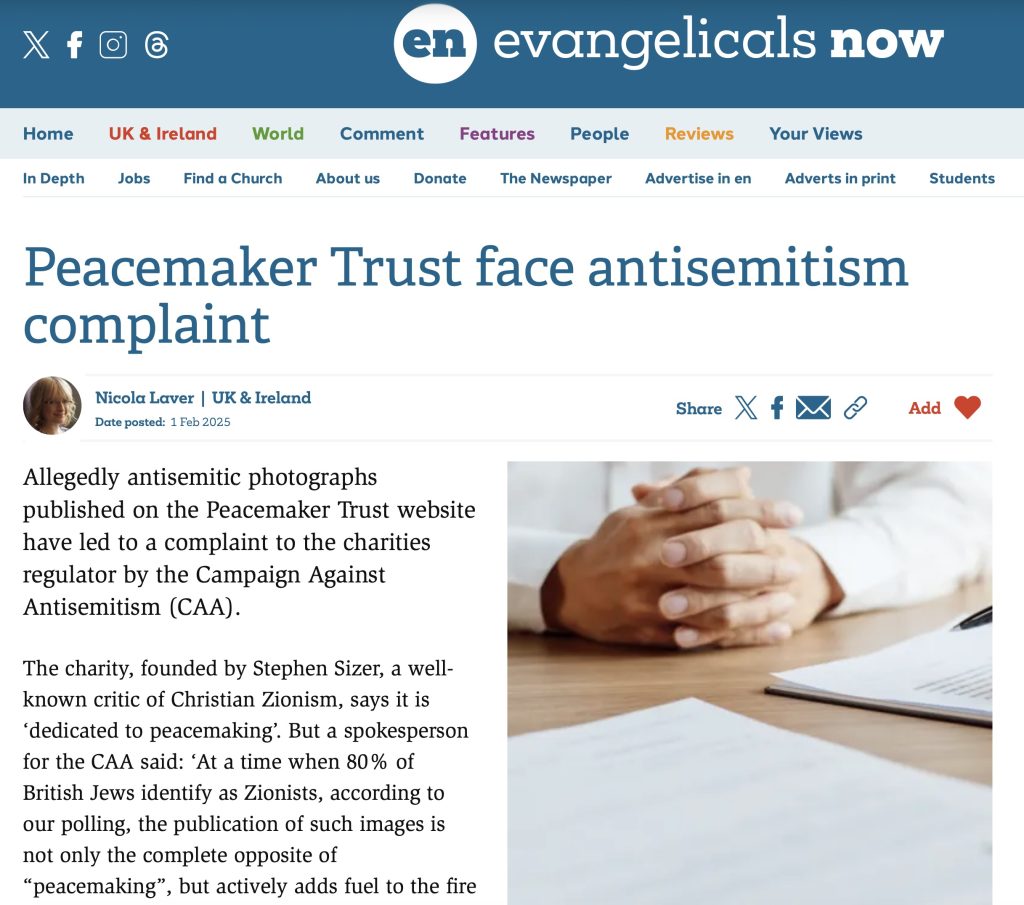
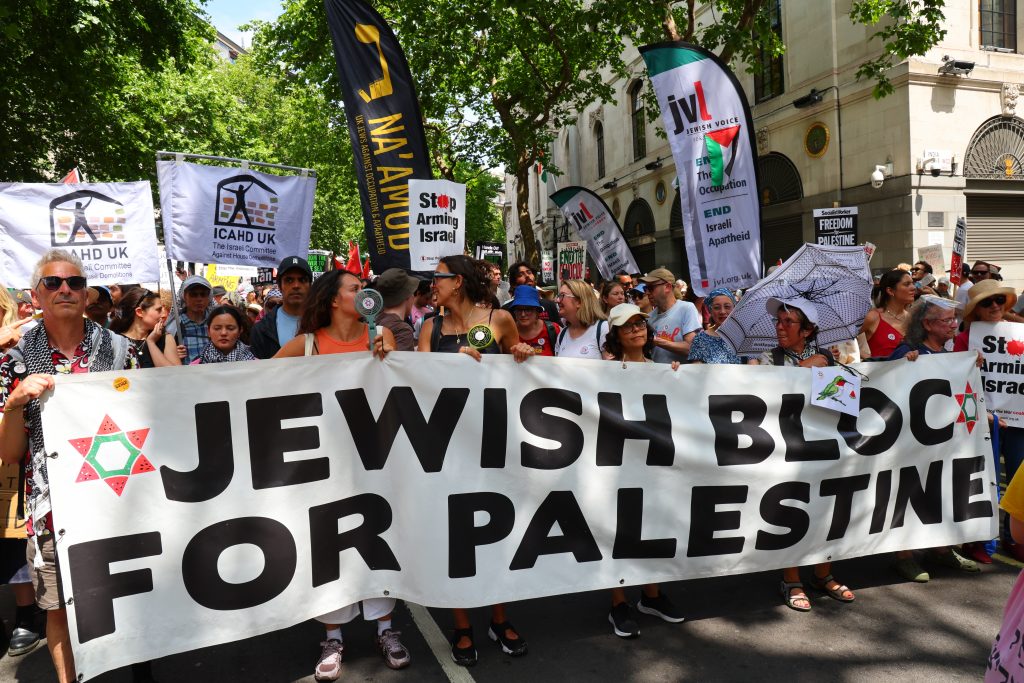
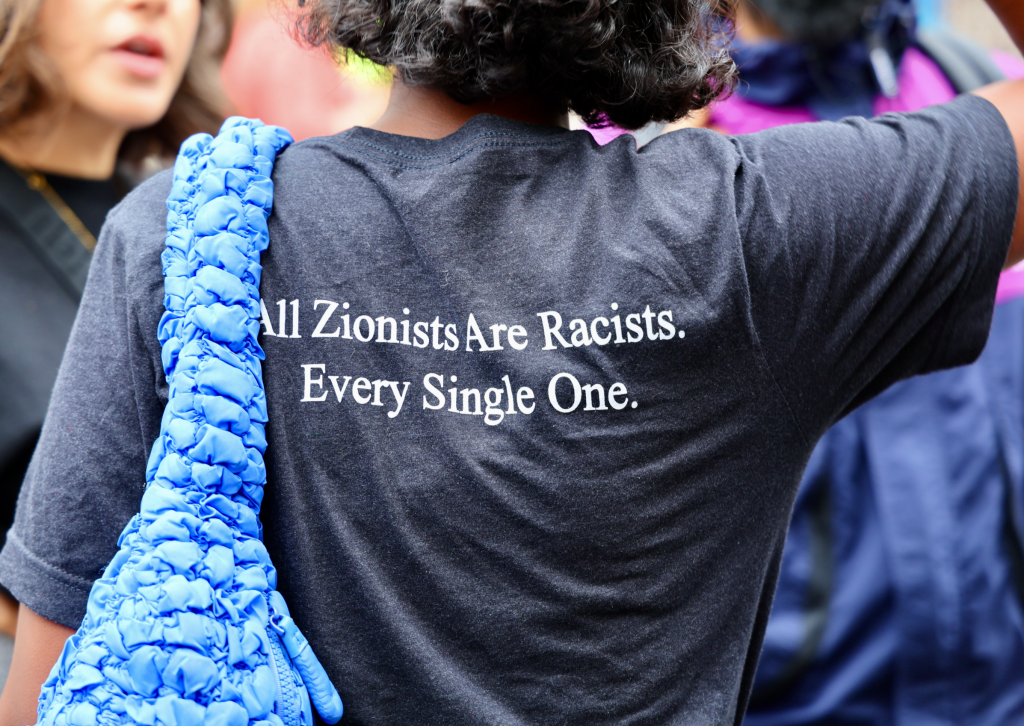
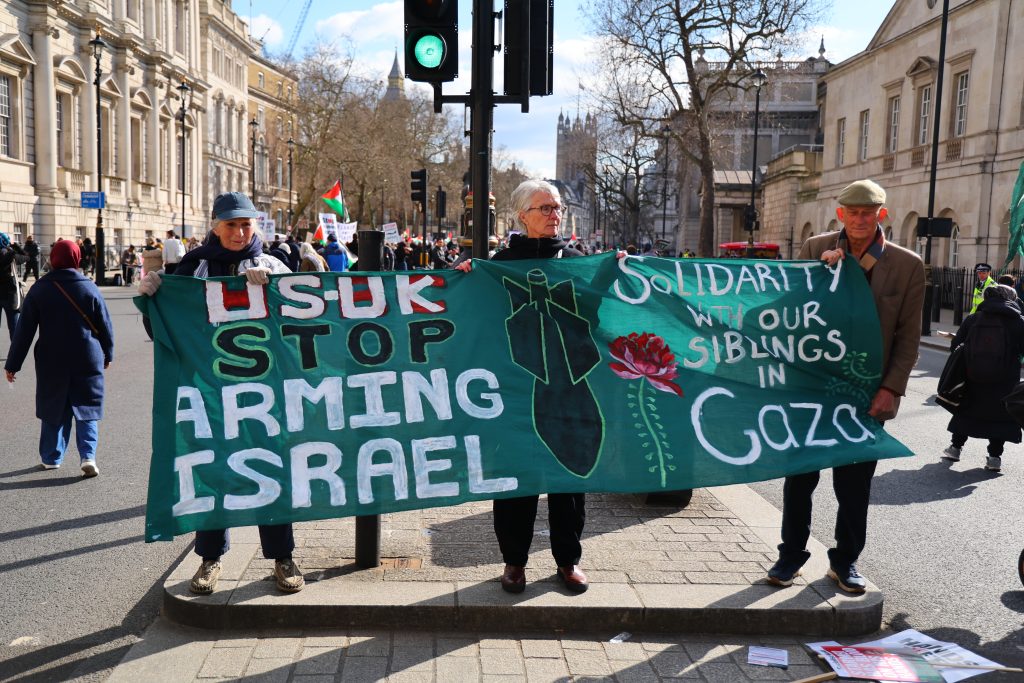
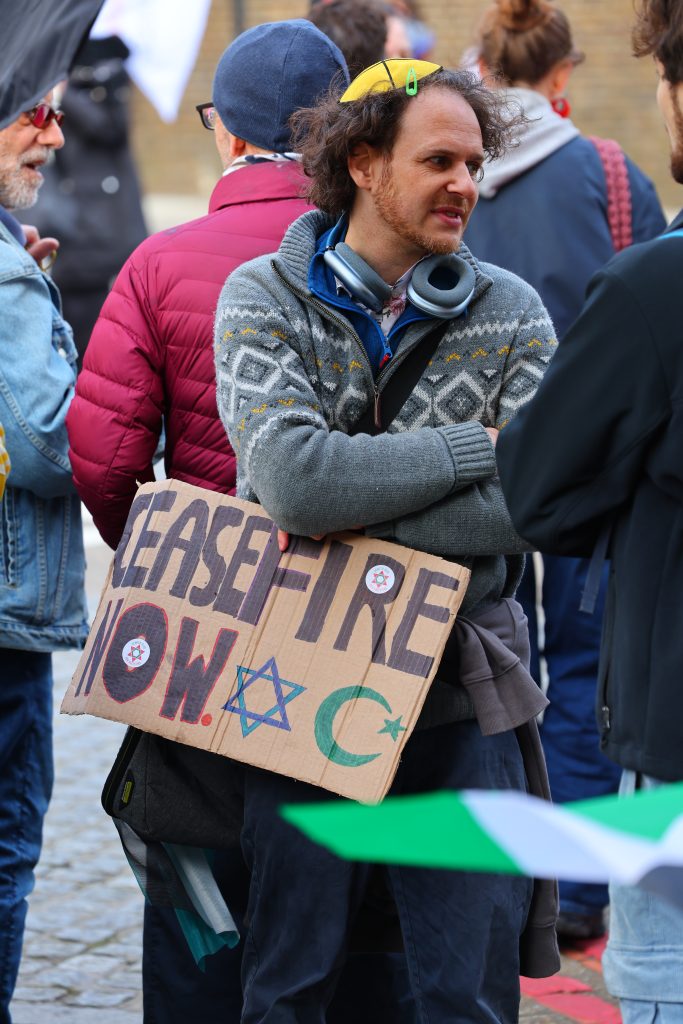
Earlier this year the Charity Commission received a complaint alleging that statements appearing in two photographs posted on the Peacemaker Trust website taken at a national demonstration in London against the genocide in Gaza were antisemitic. An article in the monthly Christian periodical, Evangelicals Now, gave oxygen to the complaint apparently made by the Campain Against Antisemitism. The Charity Commission asked the trustees for an explanation. It is hoped that sharing the answers given will assist others who may face similar complaints in the future.
Complaint Refuted
“We wish to begin by stating categorically that we refute any notion that by posting photographs taken at a national demonstration held in London last September calling for an immediate ceasefire and an end to the genocide in Gaza, our director, Dr Sizer was “supporting or giving a platform to inappropriate, unlawful, radical or extremist views”. We also believe it is entirely mendacious of the Campaign Against Antisemitism to allege that “the volume of images… demonstrate a hostility towards Jews.”
We believe their complaint is an attempt to deflect attention away from legitimate and lawful criticism of the genocide, ethnic cleansing and war crimes alleged to have been committed by Israel in Gaza… We believe our director’s participation in lawful demonstrations calling for a permanent ceasefire and end to genocide, is entirely consistent with our charitable purposes and in particular, our commitment as director and trustees (who are all incidentally Anglican clergy or mission staff), “To seek to transform unjust structures of society, to challenge violence of every kind and to pursue peace and reconciliation.”
With our knowledge and support, Dr Sizer has attended several national demonstrations over the past year. They are not “Pro-Palestinian” but demonstrably pro-justice, peace and reconciliation, explicitly calling for the implementation of international humanitarian law, an immediate and permanent ceasefire, access to humanitarian aid and an end to the genocide in Gaza.
We believe that seeking justice for Palestinians will ensure security for Israelis within a shared democracy. We also believe that participation in these demonstrations, alongside people of other faith communities, promotes religious harmony in the UK by diffusing religious extremism and racism, including Islamophobia and Antisemitism… Dr Sizer also happens to be a keen photographer and, on this occasion, simply published a collage of photographs taken at the September demonstration with the following disclaimer,
“Photos taken at the National March for Palestine held 7th September 2024 from Pall Mall to the Israeli Embassy. In supporting this demonstration against genocide on Gaza, it should not be inferred that the director or trustees necessarily endorse all of the statements appearing on all the placards appearing in these photos.”
From the River to the Sea
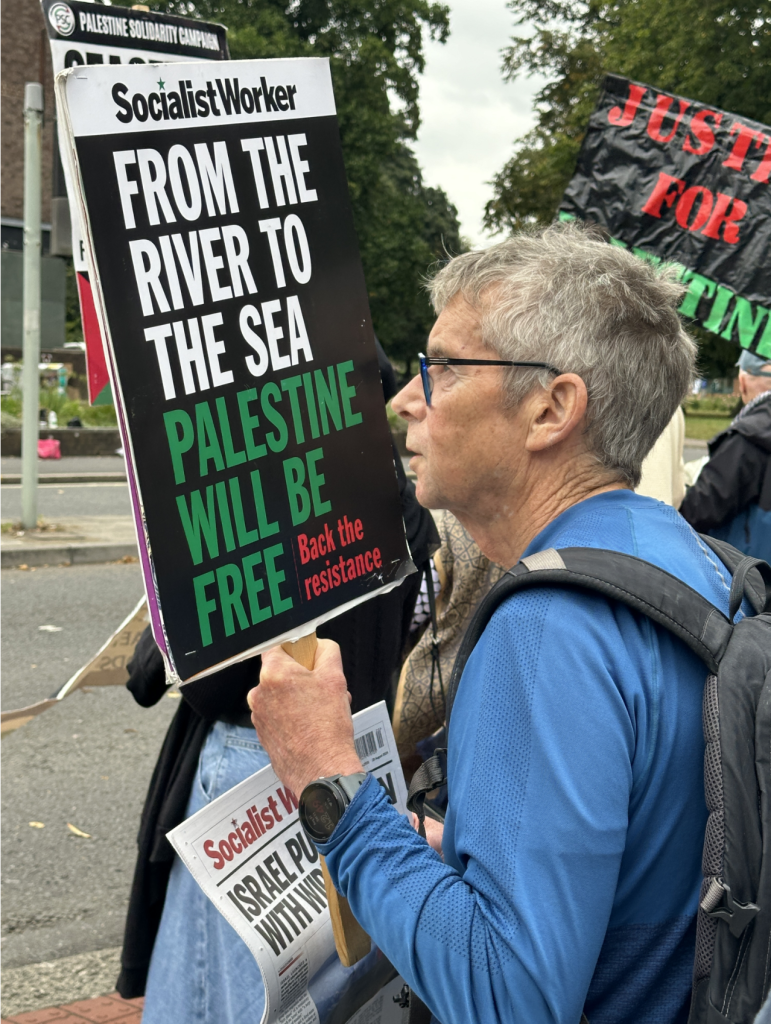
The Charity Commission specifically asked for an explanation of the meaning of wording featured in two of the photos. “In one of the photos there are placards held by protestors that display the phrase “from the river to the sea, Palestine will be free. Back the resistance.” Explain what is meant by this phrase.” The trustees responded,
“In this instance the phrase appears on a poster of the Socialist Workers Party. We do not know what the SWP intends by the phrase… The phrase as a whole has contested meaning. It may be helpful to unpack the phrase into its three elements and define each in turn.
“From the river to the sea” is an expression increasingly used by Israeli leaders to claim exclusive sovereignty for Jewish people to all the territory between the River Jordan and the Mediterranean. The drive to establish the “Greater Land of Israel” has been the central ideological goal of the Likud Party, which has dominated Israeli politics since 1977. The Likud Party Platform in 1977, for example, insisted “The right of the Jewish people to the land of Israel is eternal and indisputable… therefore, Judea and Samaria will not be handed to any foreign administration; between the Sea and the Jordan there will only be Israeli sovereignty.”[1]Rashid Khalidi elaborates,
“The commitment to Greater Israel was enshrined in the “Basic Laws” of the Israeli state in 2018 when the Knesset passed the “Nation State of the Jewish People” law. This law states that the right to national self-determination in Palestine “is unique to the Jewish People” and that “the State views the development of Jewish settlement as a national value, and shall act to encourage and promote its establishment and strengthening.” This commitment is one of the “guiding principles” of the current Israeli government, which stated that “the Jewish people have an exclusive and inalienable right to all parts of the Land of Israel,” including “Judea and Samaria.”[2]
In January 2021, the Israeli human rights organisation, B’Tselem, published a report entitled, “A regime of Jewish supremacy from the Jordan River to the Mediterranean Sea: This is apartheid.”[3]
“Israel practices a policy of “Judaizing” the area, based on the mindset that land is a resource meant almost exclusively to benefit the Jewish public. Land is used to develop and expand existing Jewish communities and build new ones, while Palestinians are dispossessed and corralled into small, crowded enclaves. This policy has been practiced with respect to land within sovereign Israeli territory since 1948 and applied to Palestinians in the Occupied Territories since 1967. In 2018, the underlying principle was entrenched in Basic Law: Israel – the Nation State of the Jewish People, which stipulates that “the State considers the development of Jewish settlements a national value and will take action to encourage and promote the establishment and reinforcement of such settlements.”[4]
During a speech before the United Nations General Assembly on September 22, 2023, Prime Minister Benjamin Netanyahu held up a map that shows Israel stretching “from the river to the sea.”[5] In January 2024, Benjamin Netanyahu further insisted, “The State of Israel has to control the entire area from the River to the Sea.”[6]
The expression “From the River to the Sea” together with “Palestine will be free” when expressed by most Palestinians and their supporters,is by contrast, an aspirational call for freedom, human rights, and peaceful coexistence, not death, destruction, or hate.
Yousef Munayyer, head of the Palestine/Israel Program and a senior Fellow at Arab Center, Washington has explained, “There isn’t a square inch of the land between the river and the sea where Palestinians have freedom, justice and equality, and it has never been more important to emphasize this than right now.”[7]
The aspiration “Palestine will be free” is therefore simply upholding the basic right Palestinians have to the freedoms enshrined in the Universal Declaration of Human Rights and numerous UN resolutions.
It means freedom from oppression, from military occupation, and from apartheid. It is the freedom to live as equals and enjoy their inalienable right to self-determination, whether in one democratic state from the river to the sea or two sovereign and independent states side by side.
The expression “back the resistance” is similarly contested. As trustees of a Christian charity dedicated to peacemaking, we disavow the use of violence to resolve conflict and support non-violent means of resisting oppression… However, we concede that Palestinians have a recognized right under international law to resist Israeli occupation under Protocol I of the Geneva Conventions. This right is affirmed in the context of the right of self-determination of all peoples under foreign and colonial rule.[8]
All Zionists are Racists
The Charity Commission also asked “In a further image a protester can be seen wearing a t-shirt containing the slogan “All Zionists are racist. Every single one.” Explain what is meant by this phrase.” The trustees replied,
“There is no consensus even within the Jewish community as to what is meant by the term ‘Zionism’.[9] “It’s difficult to say definitively what modern Zionism is. Professor of Israel Studies at Oxford University, Yaacov Yadgar, told us that “these terms (Zionism, Jewish state, etc.) have competing, often conflicting meanings.” He said that surveys that try to measure how many British Jews are Zionist “fail us exactly because they wrongly assume the questions they pose to their respondents are clear.”
The Oxford Living Dictionaries says Zionists believe in “the development and protection of a Jewish nation in what is now Israel”… In a 2010 study on British Jewish attitudes, the Institute for Jewish Policy Research defined it as “a nationalist ideology espousing the right of the Jewish people to self-determination in their own sovereign state in the land of Israel” – but also noted that “as the complexities of the political situation have unfolded over time, the term has often been used to mean ‘a supporter of Israel and its government’s actions and policies’.”
Meanwhile, Israeli writer A. B. Yehoshua focuses the definition of Zionism on the idea that “Israel belongs to the entire Jewish people, not just to those who are citizens of Israel. He says this is enshrined in the Law of Return, which states that every Jew has the right to live in Israel and gain Israeli citizenship.”[10]
Whatever the term meant to Zionists in earlier generations, today there is a consensus of opinion that the term is understood to reflect support for the policies of the Israeli government.
According to the Institute for Jewish Policy Research, the proportion of British Jews self-identifying as Zionist fell from 72% to 63% in 2022. Among Jews in their twenties, the number falls to 57%. The same JPR survey found that around a quarter of British Jews now self-identify as anti-Zionist or non-Zionist. Another 14% are unsure.[11]
What is more significant is the fact that numerically, the vast majority of Zionists are not even Jewish at all but Christian. According to the Religion Media Centre, in the United States there are at least 30 million people who self-identify as Christian Zionists.[12] That figure is likely to be an underestimate.[13]
As long ago as 2007, at the AIPAC annual conference, pastor John Hagee, founder of Christians United for Israel, claimed, “The sleeping giant of Christian Zionism has awakened. There are 50 million Christians standing up and applauding the State of Israel.”[14] In the same year, Hagee compared the number of Christian and Jewish Zionists, “When 50 million evangelical bible-believing Christians unite with five million American Jews standing together on behalf of Israel, it is a match made in heaven.”[15]
Harvard Divinity School similarly suggests there are tens of millions of Christian Zionists in the USA[16] with tens of millions more worldwide.[17] While it is difficult to estimate the size of the Christian Zionist movement globally, in his doctoral research on the subject Dr Sizer estimated the number to be between 100-200 million.[18]
Based on the figures used by advocates as well as critics, it is not unreasonable to estimate in broad terms that between 90% and 95% of people identifying as Zionists are Christians. It is therefore not accurate to equate Jewishness with Zionism or to conflate criticism of Zionism with antisemitism.
Zionism and Apartheid
Regarding the equation of Zionism with racism appearing in the slogan on the t-shirt in the photograph, while controversial, it is factually accurate to equate Zionism with racism. It is universally acknowledged that apartheid is the institutional implementation of racist policies. The crime of apartheid has been defined by the United Nations in the following terms.
“The Apartheid Convention declares that apartheid is a crime against humanity and that “inhuman acts resulting from the policies and practices of apartheid and similar policies and practices of racial segregation and discrimination” are international crimes (art. 1). Article 2 defines the crime of apartheid… as covering “inhuman acts committed for the purpose of establishing and maintaining domination by one racial group of persons over any other racial group of persons and systematically oppressing them”. It then lists the acts that fall within the ambit of the crime. These include murder, torture, inhuman treatment and arbitrary arrest of members of a racial group; deliberate imposition on a racial group of living conditions calculated to cause its physical destruction; legislative measures that discriminate in the political, social, economic and cultural fields; measures that divide the population along racial lines by the creation of separate residential areas for racial groups; the prohibition of interracial marriages; and the persecution of persons opposed to apartheid.”[19]
In 2022, the UN published a significant report entitled, “UNWRA Israel’s 55-year occupation of Palestinian Territory is apartheid – UN human rights expert”[20]
“There is today in the Palestinian territory occupied by Israel since 1967 a deeply discriminatory dual legal and political system that privileges the 700,000 Israeli Jewish settlers living in the 300 illegal Israeli settlements in East Jerusalem and the West Bank,” said Michael Lynk, the UN Special Rapporteur for the situation of human rights in the Palestinian territory occupied since 1967.
“Living in the same geographic space, but separated by walls, checkpoints, roads and an entrenched military presence, are more than three million Palestinians, who are without rights, living under an oppressive rule of institutional discrimination and without a path to a genuine Palestinian state that the world has long promised is their right.
“Another two million Palestinians live in Gaza, described regularly as an ‘open-air prison’, without adequate access to power, water or health, with a collapsing economy and with no ability to freely travel to the rest of Palestine or the outside world.” The Special Rapporteur said that a political regime which so intentionally and clearly prioritizes fundamental political, legal and social rights to one group over another within the same geographic unit on the basis of one’s racial-national-ethnic identity satisfies the international legal definition of apartheid.”[21]
In 2022-2023, three independent international human rights organisations, Amnesty International[22], Human Rights Watch[23] and B’Tselem[24], the Israeli human rights agency, each published separate reports charging Israeli with the crime of apartheid.
Amnesty’s report was entitled, “Israel’s apartheid against Palestinians: a cruel system of domination and a crime against humanity”[25] They insisted,
“Israeli authorities must be held accountable for committing the crime of apartheid against Palestinians, Amnesty International said today in a damning new report. The investigation details how Israel enforces a system of oppression and domination against the Palestinian people wherever it has control over their rights. This includes Palestinians living in Israel and the Occupied Palestinian Territories (OPT), as well as displaced refugees in other countries.
The comprehensive report, Israel’s Apartheid against Palestinians: Cruel System of Domination and Crime against Humanity, sets out how massive seizures of Palestinian land and property, unlawful killings, forcible transfer, drastic movement restrictions, and the denial of nationality and citizenship to Palestinians are all components of a system which amounts to apartheid under international law. This system is maintained by violations which Amnesty International found to constitute apartheid as a crime against humanity, as defined in the Rome Statute and Apartheid Convention…
“There is no possible justification for a system built around the institutionalized and prolonged racist oppression of millions of people. Apartheid has no place in our world, and states which choose to make allowances for Israel will find themselves on the wrong side of history. Governments who continue to supply Israel with arms and shield it from accountability at the UN are supporting a system of apartheid, undermining the international legal order, and exacerbating the suffering of the Palestinian people. The international community must face up to the reality of Israel’s apartheid, and pursue the many avenues to justice which remain shamefully unexplored.”
Our report reveals the true extent of Israel’s apartheid regime. Whether they live in Gaza, East Jerusalem and the rest of the West Bank, or Israel itself, Palestinians are treated as an inferior racial group and systematically deprived of their rights. We found that Israel’s cruel policies of segregation, dispossession and exclusion across all territories under its control clearly amount to apartheid. The international community has an obligation to act.”[26]
In June 2023, former United Nations Secretary-General Ban Ki-Moon and former UN Human Rights Commissioner Mary Robinson, visited Israel/Palestine and highlighted the “ever growing evidence” that “the situation meets the international legal definition of apartheid”.[27] In August the same year, the former Northern Commander of the Israeli army, Amiram Levin, described the situation in the West Bank as one of “total apartheid.”[28] In September that year, Tamir Pardo, who headed Mossad, Israel’s national intelligence agency, under Prime Minister Benjamin Netanyahu from 2011 to 2016, said that Israel is imposing apartheid on the Palestinians, joining, according to the Guardian, “a growing number of prominent Israelis to compare the occupation of the West Bank to South Africa’s defunct system of racial oppression.”[29]
Significantly, in 2024, the International Court of Justice found Israel responsible for Apartheid.
“In a historic ruling the International Court of Justice has found multiple and serious international law violations by Israel towards Palestinians in the Occupied Palestinian Territory, including, for the first time, finding Israel responsible for apartheid. The court has placed responsibility with all states and the United Nations to end these violations of international law. The ruling should be yet another wake up call for the United States to end its egregious policy of defending Israel’s oppression of Palestinians and prompt a thorough reassessment in other countries as well.”[30]
If the crime of apartheid is acknowledged to be a form of racism and Israel, as a Zionist state, has been repeatedly found to be practising apartheid, by the World Court, UN and human rights organisations, it is quite legitimate to equate Zionism and its supporters with racism. However, the trustees would want to emphasize again that, “In supporting this demonstration against genocide on Gaza, it should not be inferred that the director or trustees necessarily endorse all of the statements appearing on all the placards appearing in these photos.”
Satisfied with these answers, the Charity Commission informed the trustees that “The Commission has considered and assessed the information submitted as part of case correspondence and is not making a finding on it... On confirmation that this letter has been received, the Commission will close its case into the Charity. Thank you for your cooperation with the Commission.”
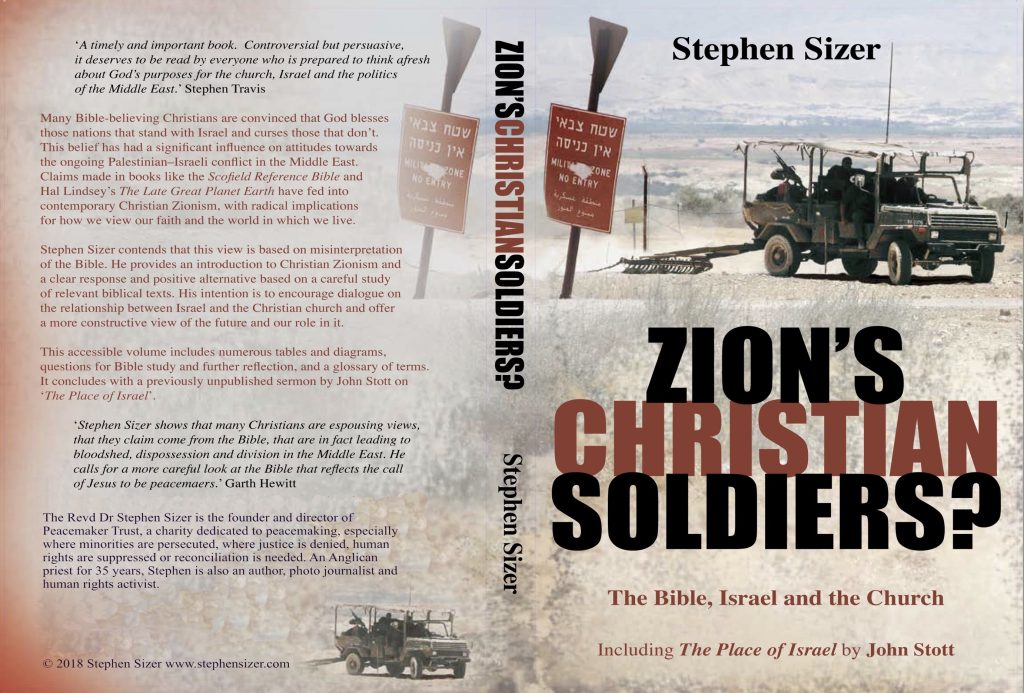
Across the U.S., UK, and Europe, governments are cracking down on those who speak up for Palestinian rights. Join us for a timely conversation with Rev. Dr. Stephen Sizer — Anglican priest, author of Christian Zionism: Roadmap to Armageddon, and former director of Peacemaker Trust — as we explore the state of the Palestinian liberation movement, the role of Christian Zionists in enabling apartheid and genocide, and what this escalating repression means for all of us.
Co-sponsored by Palestine Justice Partners and Apartheid-Free Working Group of Binkley Baptist Church
I am sure like me you are here because you feel you have no choice. It is a moral imperative to show solidarity with people in Gaza and Palestine. It is sobering to realise that for the first time in history, genocide is being recorded live on social media by the victims themselves. No one can say they did not know.
I am deeply ashamed of our government’s refusal to impose sanctions on Israel, to ban arms exports and support the ICC and ICJ investigations into genocide and war crimes, or even simply demand that Gazans be given immediate and full access to food, water, fuel, shelter and medical supplies.
But I feel anger toward so called religious leaders who are failing to give moral leadership and pressure the government to comply with UN resolutions and uphold the rule of international humanitarian law. Where are the Archbishops and Bishops today? They still refuse to acknowledge let alone condemn Israel for imposing apartheid, and perpetrating ethnic cleansing and genocide in Gaza and Palestine.They are false prophets crying ‘peace, peace’ when there is no peace. They have not only lost their voices but lost their moral authority also.
It is hard to comprehend the enormity of the indiscriminate death and destruction Israel has wrought on Gaza. More women and children have been murdered or injured in Gaza than are here today in this demonstration.
What can we do? We can pray to the God of justice to bring an end to this evil, will punish war criminals and bring swift justice and lasting peace to Palestinians free in their own land. And we can act. If our political leaders won’t impose sanctions, we can boycott and divest from companies profiting from or facilitating the genocide in Gaza and the West Bank. And remember to use your vote wisely in the forthcoming May local elections.
I invite you to join me in a minutes silence to remember the bereaved, the injured and traumatised in Gaza and Palestine today.
“In a world ravaged with identity politics it becomes quite the challenge to stand against the grain and uphold biblical truths. Joining me today is Rev. Stephen Sizer, a humanitarian, scholar, and peace advocate for the kingdom of heaven. He unveils suppressed history and sheds clarity and context of scripture to help the ecclesia better grasp our identity in Christ and our purpose as ambassadors for the kingdom of heaven.”
This article was originally published in May 2024. Between October 2023 and February 2024, the Church of England Archbishops and Bishops issued five statements on the genocide in Gaza (carefully avoiding using the term). Since February 2024, they have been completely silent despite mounting and indisputable evidence of genocide and war crimes, reported by the United Nations, to the International Criminal Court and International Court of Justice, by human rights organisations such as Amnesty International and indeed even by Christian leaders in Palestine. It has indeed been a year of shameful silent complicity, not just by the Church of England but virtually every Western mainstream denomination.
“Gaza today has become the moral compass of the world”, insisted the Reverend Dr. Munther Isaac in his 2023 Christmas sermon, entitled, “Christ in the Rubble.” After his sermon went viral, his words were subsequently quoted by UN Deputy Secretary-General, Amina Mohammed.
A short video introduction to the article – viewed 18k times in the first week.
Lamentably, many Christian leaders in the USA and Europe have stood by, silent and complicit, unwilling to criticise Israel for what is increasingly recognised as a genocidal campaign against the Palestinian people.
This article will analyse the Church of England official statements about Gaza since 7th October 2023, together with criticisms, and provide an assessment of the Church’s moral integrity in its stance on Gaza.
Websites store cookies to enhance functionality and personalise your experience. You can manage your preferences, but blocking some cookies may impact site performance and services.
Essential cookies enable basic functions and are necessary for the proper function of the website.
Name
Description
Duration
Cookie Preferences
This cookie is used to store the user's cookie consent preferences.