Posted on 15:17 Hrs,October 18th, 2009 by Stephen Sizer

Who are God’s Chosen People? The Bible, Israel and the Church from Stephen Sizer on Vimeo.

This seminar was delivered at the University of Dundee Chaplaincy on Saturday 17th October 2009.

It is not an understatement to say that what is at stake is our understanding of the gospel, the centrality of the cross, the role of the church, and the nature of our missionary mandate, not least, to the beloved Jewish people. If we don’t see Jesus at the heart of the Hebrew scriptures, and the continuity between his Old Testament and New Testament saints in the one inclusive Church, we’re not reading them correctly.

The key question is this “Was the coming of Jesus and the birth of the Church the fulfilment or the postponement of the promises God made to Abraham?”

Christian Zionists see the promises of identity, land and destiny as part of an ongoing covenant God has with the Jewish people. In this book I unpack this question and show that Christian Zionism is a recent manifestation of a heresy refuted by the New Testament.

For an outline of this seminar see http://www.cc-vw.org/articles/zcs2.pdf

Posted on 07:39 Hrs,October 18th, 2009 by Stephen Sizer

The End Times: A Christian Perspective from Stephen Sizer on Vimeo.

A paper delivered at the University of Dundee on Thursday 15th October 2009, entitled ‘A Christian Perspective on the End Times’

Professor Saeed Bahmanpour, Principal of the Islamic College, London, also delivered a paper on the ‘End Times’ from a Muslim perspective. Afterwards we had a lively debate on the similarities and differences between the two perspectives.

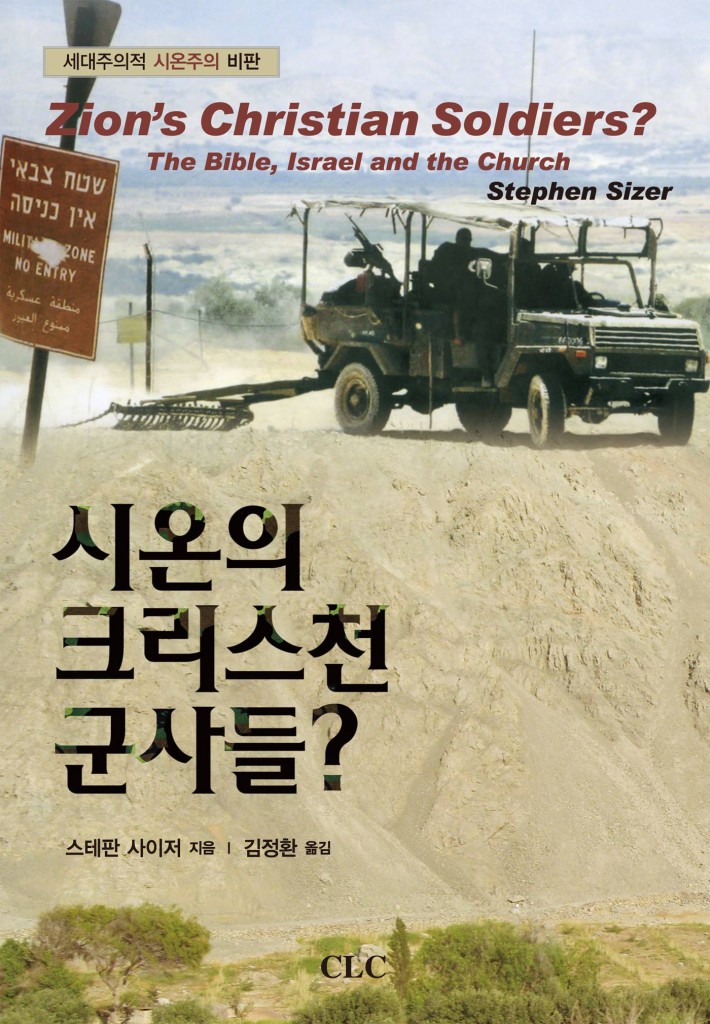
The presentation was based on a chapter from my book Zion’s Christian Soldiers stephensizer.com/books/zions-christian-soldiers/

You can view some photos here

Posted on 16:10 Hrs,August 23rd, 2009 by Stephen Sizer

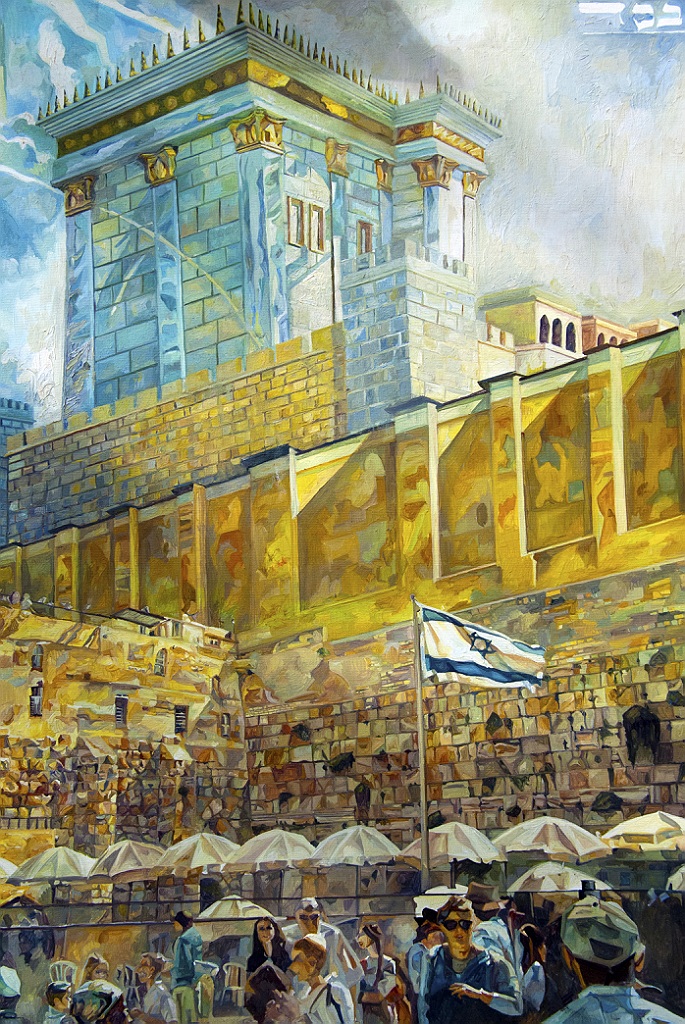
Ready to Rebuild? The Temple in Scripture from Stephen Sizer on Vimeo.

On January 8, 2001, former Shin Bet secret service chief Carmi Gillon and former police commissioner Assaf Hefetz together with leading Israeli academics delivered a report to the then, Israeli Prime Minister, Ehud Barak, detailing their concerns regarding plots by several Jewish extremist groups, to blow up the Dome of the Rock and Al-Aqsa Mosque. Gillon and Hefetz founded Keshev, the Centre for the Protection of Democracy, based in Tel Aviv, after the assassination of Prime Minister Rabin. Their report, entitled, ‘Target Temple Mount’ examined current threats to the Temple Mount from extreme militant and Messianic groups. It concluded,

‘The Temple Mount is like a smouldering volcano that is bubbling and threatening to erupt – a threat that is liable to endanger Israel’s existence.’[1]

Six months later, in July 2001, the Rabbinical Council of Judea, Samaria and Gaza reversed the position taken for nearly 2000 years. They called upon all rabbis to take their communities to visit the Temple Mount. This was the first time a group of rabbis representing a significant proportion of the religious Jewish community had ruled it permissible for Jews to ascend the Temple Mount. Previously this had been forbidden because Jews might walk on the area what used to be the sacred holy of holies.

The rabbis also called upon the Yesha Council of Jewish settlements to organise mass visits to the Temple Mount from the settlements.[2] As a result around 500,000 secular, religious and ultra-Orthodox Jews gathered near the Temple Mount at the Western Wall ‘and swore faithfulness to the Temple Mount and Jerusalem.’[3] In the same month, July 2001, the Israeli Supreme Court made an equally momentous decision. For the first time ever they gave permission to Gershon Saloman and the Temple Mount Faithful to hold a symbolic cornerstone laying ceremony for the Third Temple near the Dung Gate adjacent to the Western Wall. Every year on Tisha B’Av (29th July), the day when Jews mourn the destruction of the first and second Temples, Salomon and his Faithful drive a lorry carrying three ton corner stones as near as possible to the Temple Mount. In 2006, despite police objections, the Israeli Supreme Court gave them permission to actually enter the area of the Haram Al Sharif on the festival of Tisha B’Av. To pre-empt a massacre, the police closed the site to Jews as well as Muslims for the whole day. Intelligence reports revealed that thousands of Muslims were planning to flock to the site to protect it.[4] On Tisha B’Av in July 2007, in 2008 and yet again this July, Salomon and his disciples have asserted their legal right to hold a ceremony nearby. Salomon’s agenda is clear and unambiguous.

“The Israeli Government must do it. We must have a war. There will be many nations against us but God will be our general. I am sure this is a test, that God is expecting us to move the Dome with no fear from other nations. The Messiah will not come by himself, we should bring him by fighting.”[5]

Since 1967, when Israel took the Temple Mount by force, there have been no less than 100 armed assaults on the Haram Al Sharif often led by Jewish rabbis.[6] An Israeli Arab MP, Mohammed Barakeh described the Israeli High Court’s decision as like putting ‘petrol in the hands of declared pyromaniacs.’  And it seems some Christians  too are convinced the Jewish Temple must be rebuilt. So much so, they are funding Jewish groups committed to removing the Dome of the Rock and replacing it with a Jewish Temple.

But aren’t we just dealing with a small bunch of religious fundamentalists and radical extremists? If only. Millions of Orthodox Jews worldwide pray three times a day “may the Temple be speedily rebuilt in our days”. And millions of Christians readily buy books on prophecy that predict it. And it seems, most Israelis, religious and secular, apparently agree.

Read more here and listen here

| Posted in Bible, Messianic, Sermons, Theology | Comments Off
Posted on 03:35 Hrs,March 11th, 2009 by Stephen Sizer

Published in Mishkan, A Forum on the Gospel and the Jewish People: Issue 55/2008

The following quotations are taken from an article by Tony Higton published in Mishkan which includes a response to my book, Christian Zionism: Road-map to Armageddon?

Tony Higton is Rector of North and South Wootton near Kings Lynn. The fact that I was married in South Wootton and my mother in law lives in the parish is purely, if delightfully, coincidental. Tony previously served as the General Director of the Church’s Ministry among Jewish People and Rector of Christ Church, Jerusalem. Before publishing my book, he read the draft sections pertaining to CMJ, made comments, and these were all incorporated in the published version.

I warmly commend his article and the case he makes for Moderate Christian Zionism, and invite you to read it and decide whether the selective quotations below, which specifically pertain to my views or book, are in any way taken out of context.

In his introduction, Tony writes:

“After years of sparring, Stephen Sizer and I met up and found we had wide areas of agreement. Having worked in Jewish ministry for seven years, half of them in Jerusalem, I have seen the best and worst of Christian Zionism. Insofar as it combats anti-Semitism, defends the existence of a safe homeland for Jewish people, promotes evangelism among Jewish people, and supports reconciliation in the Holy Land, it is good.
However, Sizer is right to criticize the serious failings of some Christian Zionism. I agree with him in rejecting the following errors which are held by many Christian Zionists:

  • Lack of godly compassion for the Palestinians, and of concern for their human rights and about their legitimate aspirations.
  • A negative attitude toward Palestinians, and Arabs in general, to the point of racism.
  • Uncritical support for Israel (a secular, sinful state like any other), justifying all its actions against the Palestinians.
  • Neglecting or even opposing and forbidding evangelism of Israelis, sometimes believing that Jewish people can experience salvation through Judaism.
  • Being more interested in the fulfilment of prophecy than in application of kingdom principles such as justice and reconciliation.
  • Opposing the peace process.
  • Sometimes advocating the ethnic cleansing of Palestinians from the Holy Land.
  • Sometimes supporting the rebuilding of the temple regardless of the problematic theological implications and the danger of provoking extreme violence.” (p. 18)

In the second section entitled, “Dangers of Unbiblical Views” Tony writes:

“I am grateful for Sizer’s book because it stimulates thought and, in my case, underlines many of the questions I have been asking about Christian Zionism in recent years. And I speak currently describing myself (provocatively) as a pro-Palestinian Christian Zionist!”
“Having said that, I am unhappy about calling myself a Zionist because of the prevalence of extreme Christian Zionism which Sizer describes. I attended a week-long conference on Christian Zionism held in Jerusalem by the Sabeel Palestinian Liberation Theology Centre. Initially, I was quite irritated by what I felt was their extreme model of Christian Zionism. I thought it was a caricature and the moderate view I held was the majority view. But one of the main things I learned from that conference was that it is American Christian Zionism (which is very influential among Messianic believers in Israel) which is dominant, and it is very extreme. British (and other moderate) Christian Zionists need to understand this.” (pp. 19-20)

In the fourth section entitled, “Putting Principles into Practice”, Tony writes:

“Sizer seems not fully to understand the Israeli need for security. We once stood together in Abu Dis, just outside Jerusalem, at the foot of the security wall – ten meters of concrete towering above us. He asked me: “Well, what do you think of the wall, Tony?” I replied: “I think it is obscene. But terrorism is even more extreme.” (p. 24) – on this I concur.

In the fifth section in which Tony makes the case for “Moderate Biblical Zionism” he writes:

“It seems to me that Sizer, in his convert’s passion for justice for the Palestinians, tends to throw the baby out with the bathwater with respect to Christian Zionism. One result is that he does not treat the biblical material seriously enough… I still believe that a biblical case can be made for (balanced and moderate Christian Zionism).” (p. 25)

“Sizer raises various criticisms of the biblical justification Christian Zionists claim. In particular he claims that Christian Zionism has an “ultra-literal” and futurist hermeneutic. It is, of course, very simple to make out that all the prophecies referred to by Christian Zionists are not to be taken literally as referring to the Jewish people. In one stroke it removes all sorts of questions and difficulties. But, as we shall see, there are difficulties with this view.
I am also aware that the New Testament radically develops the teaching of the Old Testament. The Old is the bud and the New is the flower. In rightly stressing the Jewish roots of the Christian faith, we must never forget this radical development, which Sizer stresses. So there are important developments of land to world, temple to Jesus, etc.” (p. 25-26)

“I is true that some, including some Orthodox Jewish people, think that such a re-establishment of the state is not the real thing prophesied in Scripture, which could only be established by Messiah. Others, including Sizer, think Israel, because of disobedience to God, could lose the land again.” (p. 28)

“Sizer writes: “Belief in the final restoration of the Jews to Zion is also based on a literal and futurist reading of selective Old Testament prophecies. However, the texts themselves indicate that such a return occurred under Ezra and Nehemiah and that no further return is to be anticipated. It may be argued that Jesus repudiated any such expectation. New Testament writers apply such Old Testament promises to both believing Jews and Gentiles.”
However, there are OT prophecies which scholars believe relate to a time much later than the return under Ezra and Nehemiah, and are often in a messianic context. I refer to Isaiah 11:11-12; 60:4, 9, 21-22; 61:4-5; Jeremiah 3:12-18; 23:7-8; Ezekiel 38:8, 16; 39:25-29; Joel 3:1-2, 17, 20; Amos 9:14-15; Zechariah 12:2-3, 10-11; and 14.” (p 29)

“In conclusion, then, I agree with much of the criticism Sizer makes of Christian Zionism and particularly of its lack of commitment to justice and reconciliation. Like him, I too reject the extremes of Christian Zionism, seen particularly in the USA and Israel. However, I believe Sizer throws the baby out with the bathwater, particularly by not dealing seriously enough with the biblical material, which I believe forms a credible foundation for a balanced, moderate Christian Zionism.
Moderate Christian Zionists will:

  • Pray for the Israelis and the Palestinians, showing compassion for their needs, pain, and fears, and an awareness of their faults.
  • Pray for and, where possible, take action to promote reconciliation, peace, security, and justice for both people groups and an end to violence on both sides.
  • Pray for and support evangelism among both people groups.

Having read Sizer’s book carefully, I remain a pro-Palestinian Christian Zionist who is passionate about justice and reconciliation and sensitive to the needs, pain, and fears of both Palestinians and Israelis.” (p. 29)

It was in part to encourage further dialogue on the interpretation of Scripture regarding the relationship between Israel and the Church that I wrote the sequel, Zion’s Christian Soldiers. I look forward to further conversations with Tony Higton on the case for Moderate Christian Zionism.

Posted on 00:19 Hrs,November 16th, 2008 by Stephen Sizer

Dear Mordechai,

I promised to write one more time and offer to meet, as Jesus instructed us to do in Matthew 18, in response to your decision to use an anonymous blog to criticise me in September.

You also gained access to our church facebook account without revealing your identity and then wrote to many of our church family to warn them about me, including children who were, not surprisingly, disturbed as were their parents. You also wrote anonymously to the hosts of various conferences I was invited to, to urge them not to allow me to speak. You know from the responses you received, some from Messianic leaders, that they share the Apostle Paul’s disdain for your methods.

“Rather, we have renounced secret and shameful ways; we do not use deception, nor do we distort the word of God. On the contrary, by setting forth the truth plainly we commend ourselves to every man’s conscience in the sight of God.” (2 Corinthians 4:2).

In one of your blogs you referred to Jacob Prasch as an “authentic Messianic teacher”. I therefore assume you are a Messianic believer also. On that basis I invite you again to meet with me to resolve the issues that concern you rather than continue to use an anonymous blog to slander me. I realize this may be difficult if you are presently in Israel.

You specifically criticize me for associating with people who have in the past or indeed presently justify the use of violence against Israel or whom you designate as anti-semitic or holocaust deniers. You are wrong to assume that in dialoguing with them, or by participating in conferences with them, that I in any way approve of, or agree with, their views or methods. On the contrary I have made my own views plain through my writings, website and lectures, on the illegitimacy of the use of violence as a means of resolving the Arab-Israeli conflict.

To clarify my position and to anticipate such criticisms, in my book Zion’s Christian Soldiers, I wrote the following:

“It is true that at various times in the past, churches and church leaders have tolerated or incited anti-Semitism and even attacks on Jewish people. Racism is a sin and without excuse. Anti-Semitism must be repudiated unequivocally. However, we must not confuse apples and oranges. Anti-Zionism is not the same thing as anti-Semitism despite attempts to broaden the definition. Criticising a political system as racist is not necessarily racist. Judaism is a religious system. Israel is a sovereign nation. Zionism is a political system. These three are not synonymous. I respect Judaism, repudiate anti-Semitism, encourage interfaith dialogue and defend Israel’s right to exist within borders recognised by the international community and agreed with her neighbours. But like many Jews, I disagree with a political system which gives preference to expatriate Jews born elsewhere in the world, while denying the same rights to the Arab Palestinians born in the country itself.”

In any future edition, I will emphasize, as I have done elsewhere, that I also believe the resolution of the Arab-Israeli conflict can only be achieved by peaceful means and through the implementation of international law.

Like you, I care passionately for the Jewish people and pray for a secure Israel, as well as the fulfilment of the legitimate aspirations of Palestinians to an independent, sovereign and democratic state. I believe justice for Palestinians will bring peace for Israel, reconciliation with their neighbours and the marginalisation of extremists.

As you know, followers of Jesus Christ are:

1. called to be peacemakers (Matthew 5:9)
2. to fulfill a ministry of reconciliation (2 Corinthians 5:11-21)
3. to disavow the use of violence or intimidation to further the will and purposes of God (Matthew 5:38-48).
4. and when they disagree, seek reconciliation privately and if necessary, with the mediation of others (Matthew 18:15-19)

As a minister of the gospel, my primary motivation is to share the good news of Jesus Christ with all who will listen. “I am not ashamed of the gospel, because it is the power of God for the salvation of everyone who believes: first for the Jew, then for the Gentile.” (Romans 1:16).

Jesus himself was accused of being “a friend of tax collectors and “sinners.” ’ (Luke 7:34). As one myself, I am grateful to know him as my friend, and desire to share that friendship with those who at present are outside his family, even at the expense of being maligned or misunderstood by others.

As Brother Andrew has said of his own approach, “the best way I can show my love of Israel is to seek to convert her enemies.” You have questioned my integrity, my motives and methods from a position of anonymity.

While you have expended many hours to watch videos of me, to listen to debates with me, or read sermons by me, I suggest you do not yet know me well enough to condemn me. I feel under no obligation to justify my ministry to those who hide behind the cloak of anonymity – “the men in the shadows” as Jackson Browne put it in one of his songs. I invite you instead to meet and find out whether your criticisms are really justified.

The invitation will remain open but I will not respond to you further unless and until we meet.

Yours in Yeshua
Stephen

p.s. Why are you using the IP address of Agaf HaModin, the Israeli Military Intelligence Directorate?

| Posted in Christian Zionism, Israel, Messianic, Palestine, Zionism | Comments Off
Posted on 00:08 Hrs,November 16th, 2008 by Stephen Sizer

Dear Jacob,

I have read with sadness your comments about me on your website. In obedience to
our Lord’s instructions in Matthew 18, I am willing to meet with you privately or with a mediator and seek reconciliation as brothers in Christ.

I realise you are disappointed at not being able to debate me on television. I was willing to do so until I read what you had written about me, especially the imprecatory associations with Menelaus. That was also the legal advice I received.

Through an intermediary I merely requested a postponement of the debate. Without knowing my reasons, rather prematurely you wrote, “I have nothing to say to such an utterly contemptible servant of hell, and I am not interested in hearing anything from him. He is of his father the devil.”

In response to my attempt to make contact with you, you wrote, “It is too late for that. That twisted snake should not have agreed to the television debate to begin with if he was going to run scared or back down.”

I suggest this is not especially edifying language and indeed may undermine the credibility of your ministry. I have recently debated both Geoffrey Smith of Christian Friends of Israel and David Pawson both on Premier Radio. Both conversations were constructive and honouring to the Lord.

I readily concede that you will not be happy with my critique of your interpretation of the relationship of Israel and the Church. However, on this occasion, the only one I can think of, I have not slandered you, questioned your motives or denigrated you personally.

Initially you were critical of me for being an Anglican. I am guilty as charged. In my defence I am part of the Fellowship of Confessing Anglicans committed to reforming the church on biblical grounds.

More recently you have criticised me for visiting Iran and for sharing a platform with an IRA member. You are wrong to assume that in doing so I am in agreement with the policies or actions of the Iranian government or the IRA. On the contrary I have made my own views plain through my writings, website and lectures, on the illegitimacy of the use of violence as a means of resolving the Arab-Israeli conflict.

Jesus himself was accused of being “a friend of tax collectors and “sinners.” ’ (Luke 7:34). As one myself, I am grateful to know him as my friend, and desire to share that friendship with those who at present are outside his family, even at the expense of being maligned or misunderstood by others.

As Paul says in Romans 10, “Everyone who calls on the name of the Lord will be saved.” How, then, can they call on the one they have not believed in? And how can they believe in the one of whom they have not heard? And how can they hear without someone preaching to them? And how can they preach unless they are sent?” (Romans 10:13-15)

I believe I have been ’sent’ as I know you do too. We have clearly been sent to different people. We stand or fall before our Sovereign Lord to whom we are accountable not each other.

Like you, I care passionately for the Jewish people and pray for a secure Israel, as well as the fulfilment of the legitimate aspirations of Palestinians to an independent, sovereign and democratic state. I believe justice for Palestinians will bring peace for Israel, reconciliation with their neighbours and the marginalisation of extremists.

So Jacob, thank you for reading thus far. I repeat, I am willing to meet privately or with a mediator as our Lord instructed. While I may disagree with you theologically in the future, I will continue to pray for you and ask God’s blessing on your ministry.

Yours in Yeshua,
Stephen

Posted on 12:28 Hrs,November 8th, 2008 by Stephen Sizer

I am delighted to commend this excellent article by Peter Cohen of  Messianic Good News in Johannesburg.

In his introductory remarks to his scholarly work “The Jewish people and Jesus Christ” Jacob Jocz writes:

“Both Judaism and Christianity are the result of a major controversy which took place during the first century and the first half of the second century. This controversy was of a theological nature and centred round the significance of Jesus of Nazareth. Our study has led us to the conviction that the general view, which holds that Judaism remained unaffected by the Christian episode, is untenable. Judaism had been deeply affected by the rise of Christianity and was pushed in the opposite direction. The opposition between the two creeds is thus an integral part of their separate existence. Only in opposition to each other do they learn the truth about themselves.”

The Compact Oxford English Dictionary defines “anti-Semitism” as: “hostility to or prejudice against Jews.” Much has been written about Christian anti-Semitism and in the two thousand years since the rise of Christianity there have no doubt been grave injustices perpetrated in the name of Christ, just as the intense persecutions in the early church were instigated by the Synagogue. But the real argument is a theological one. The question of who is Jesus stands at the centre of the great divide between Church and Synagogue. In recent times there have been efforts to bridge the divide from both sides, but the only way to bridge the gap between the Risen Christ whom Christians worship and the Jesus whom Rabbinic Judaism could accept is by reducing him to the stature of another Jewish Rabbi.

More…

| Posted in Evangelicalism, Evangelism, Messianic, Theology | Comments Off
Posted on 17:14 Hrs,November 5th, 2008 by Stephen Sizer

This second dose of Weird and Wacky Theology addresses whether the Jewish Temple will be rebuilt. Visit Jews for Jesus website and you can read an article by Zhava Glaser where she asks rhetorically,

“What flour is to bread, the sacrificial system is to the religion revealed in the Jewish Scriptures. It is not a garnish. It is not a flavoring. It is the very substance out of which the Jewish religion was constructed. We can forever design our own substitutes, but they cannot satisfy our yearnings the way God’s own provision can. Though some rabbis might minimize the revealed system of worship and its requirements, can the individual Jew neglect what God says? Can there be a “proper” Judaism without a priesthood, an altar, a sacrifice and a place on earth where God meets the individual?”"

For many Orthodox Jews, the answer to these rhetorical questions is clearly ‘no’. They pray three times a day that the Temple will be built in their life time. Some Messianic and Dispensational writers agree. Arnold Fruchtenbaum, for example, writes,

“there will be a sacrificial system instituted in the Millennium that will have some features similar to the Mosaic system… What will the purpose of these sacrifices in light of Christ’s death? To begin with, it should be remembered that the sacrificial system of the Mosaic Law did not remove sin either (Heb. 10:4), but only covered them (the meaning of atonement in Hebrew). Its purpose was to serve as a physical and visual picture of what the Messiah would do (Isa. 53:10-12). The Church has been commanded to keep the Lord’s Supper as a physical and visual picture of what Christ did on the cross. God intends to provide for Israel in the kingdom a physical and visual picture of what the Messiah accomplished on the cross. For Israel, however, it will be a sacrificial system instead of communion with bread and wine. The purpose of the sacrificial system in the kingdom will be the same as the purpose of communion of the Church: In remembrance of me.” (Israelology, pp.810-811).

Fruchtenbaum is not alone – he is following the Cyrus Scofield who sees the sacrifices in Ezekiel’s Temple as ‘memorial’ offerings. The problem with this interpretation is that it is not what Ezekiel says! Ezekiel 43:19 says the sacrifice must be a ‘young bull’. O dear…

The idea that the Temple must be rebuilt was popularised by Moishe Rosen. He writes, “…at some point in these stressful days, the ancient Jewish Temple will be rebuilt on the holy Temple Mount in Jerusalem… Prophecy foretells the rebuilding of the Jewish Temple and the reinstitution of the sacrifices prescribed in the law of Moses. In a vision of the future Temple, Ezekiel received this word… Some way, somehow, the Temple will be rebuilt, in spite of the fact that two Arab shrines now stand on the only site on earth where this Temple may stand.” (Overture to Armageddon, p. 114).

David Brickner, the present Director of Jews for Jesus also believes this (Future Hope, p. 18). Now before I go any further, let me make it plain, this article is not a criticism of Jews for Jesus. I have invited UK staff of Jews for Jesus to teach in our church and I continue to affirm their evangelistic work – I just don’t agree with the dispensational presuppositions of some of their leaders.

As Fruchtenbaum rightly states, the Temple sacrifices, at best, only ever provided a temporary cover for sin. The daily sacrifices, and the smoke rising from the altar were a constant reminder of the need for a Saviour. How then could God encourage the sacrificial system to be reinstated when he had sent his son Jesus to be the ultimate sacrifice, to shed his own blood on the cross to take away our sin? As Glaser rightly concludes her article:

“Isn’t it ironic that it takes the New Testament to tell of the new altar, the everlasting sacrifice and the new high priest through whom gentiles as well as Jews are made holy?”

To suggest, as some Christians do, that sacrifices must be made once more to fulfill Bible prophecy sets one passage of scripture against another, and undermines the New Testament’s teaching that the work of Christ is sufficient, final and complete.

Those who advocate the need for a new Temple and reintroduction of sacrifices (whether for atonement or as a memorial) are nevertheless ignoring the way the image of the Temple is invested with new meaning. Subsequent to Pentecost, the Temple imagery is applied to the Church, the Body of Christ, the dwelling place of the Holy Spirit. For example, Paul, writing to the Church in Ephesus, describes them as part of the new living Temple.

“Consequently, you are … members of God’s household, built on the foundation of the apostles and prophets, with Christ Jesus himself as the chief cornerstone. In him the whole building is joined together and rises to become a holy Temple in the Lord.” (Ephesians 2:19-21)

In his letter to the Corinthians, Paul quotes from passages in Leviticus and Isaiah, both of which refer to the physical Tabernacle and Temple, and applies them to the Church.

“For we are the Temple of the living God. As God has said: ‘I will live with them and walk among them, and I will be their God, and they will be my people.’ ‘Therefore come out from them and be separate, says the Lord. Touch no unclean thing, and I will receive you.’” (2 Corinthians 6:16-17 citing Leviticus 26:12 & Isaiah 52:11)

In his letter to the Romans, Paul uses Temple language to describe how we are to offer, not a dead animal sacrifice but our bodies as living sacrifices as our act of worship (Romans 12:1-2). Peter does the same thing describing the Church using Hebrew imagery associated with the Temple (Psalm 118:22; Isaiah 28:16). Christians are, he says, being made into the new house for God, in which Jesus is the ‘precious cornerstone’ (1 Peter 2:5-7).

So the Temple in Jerusalem was only intended to be a temporary building, a shadow pointing to the day when God would dwell with people of all nations through Jesus Christ. The flow of biblical revelation is progressive and moves in one historical direction. Christians who support the rebuilding of the Temple in the belief that future sacrifices will be memorial offerings, or can even atone for sin, are committing apostasy. Why? Because they are trying to reverse the flow of revelation and go back to the shadows when we already have the light of Christ. In the words of the writer to the Hebrews:

“It is impossible for those who have once been enlightened, who have tasted the heavenly gift, who have shared in the Holy Spirit, who have tasted the goodness of the word of God and the powers of the coming age, if they fall away, to be brought back to repentance, because to their loss they are crucifying the Son of God all over again and subjecting him to public disgrace.” (Hebrews 6:4-6).

And that is the final rub. People must choose between a religion and a relationship; between the
words ‘do’ and ‘done’; between law and grace; between the need to offer continual sacrifices for sin or accept the finished work of Jesus Christ in our place; between a physical Temple and a spiritual one; between one in Jerusalem that is redundant and one that encompasses the whole world that is under construction.

For further examples of wacky theology see:

Posted on 06:47 Hrs,November 5th, 2008 by Stephen Sizer

As a taster for my new book on the use and abuse of the Bible in relation to Israel and the Church, I plan to highlight examples of eccentric interpretation that lead, at best, to dubious theology, and at worst, to heresy.

Jacob Prasch is a good example. Described as an “authentic Messianic teacher” on the anonymous Seismic Shock blog, Prasch uses the story of Rachel and Leah from Genesis to teach that Jesus did not desire the Church as his bride.

“Jacob came for a bride from his own people. He desired Rachel, but he did not get Rachel at first, but Leah. After he learned to love Leah as much as he did Rachel, he got Rachel as well. In the beginning Leah had all the babies, her womb was most fruitful. But then Rachel conceives. Israel shall be a fruitful vine. Jesus came for Israel. He wanted to marry Israel, but He did not get Israel. He ends up with the bride He did not desire at first, the Gentile church. After He learns to love the Gentile church, then He gets Israel. In the beginning, the church has all the babies. But in the end, Israel becomes a fruitful vine.” (Jacob Prasch)

You can read the context here.

Here’s another example from John Wilkinson, Founder and Director of the Mildmay Mission

“ … the Jewish nation as such is shunted to a siding until the times of the Gentiles run out, to allow the express train to pass, stopping here and there to pick up the Church, and then the Jewish nation will take her place on the main line of the Divine Plan, stop at all stations and take on the world.” (Israel my Glory, 1893, p.134).

As Kevin Daly observes, “In other words what Jesus failed to do by pouring out the Holy Spirit at Pentecost, the Jews will succeed in doing much better once the church is taken out of the way.” Gilbert Bilezikian rightly characterizes this theology as turning the Church into the ‘concubine of Christ‘.

David Brickner, revives J.N. Darby’s eccentric dispensational scheme, suggesting the last two thousand years history of the Church is merely ‘a parenthesis’ to God’s future plans for the Jews, who remain his ‘chosen people’. (see Future Hope, p. 18, 130; J. N. Darby, ‘The Character of Office in The Present Dispensation’ Collected Writings., Eccl. I, Vol. I, p. 94).

By contrast, the Apostle Paul describes the extent of Jesus’ love for the Church in Ephesians 5:

“Husbands, love your wives, just as Christ loved the church and gave himself up for her to make her holy, cleansing her by the washing with water through the word, and to present her to himself as a radiant church, without stain or wrinkle or any other blemish, but holy and blameless.” (Ephesians 5:25-27)

Jesus himself said, ” Greater love has no one than this, that he lay down his life for his friends. You are my friends if you do what I command.” (John 15:13-14).

Just before he washed his disciples feet, the Apostle John writes so movingly, “Having loved his own who were in the world, he now showed them the full extent of his love.” (John 13:1)

Why was Jesus willing to die? The apostle Paul tells us in Ephesians 2 that Jesus died to reconcile both Jews and Gentiles to God the Father.

“His purpose was to create in himself one new humanity out of the two, thus making peace, and in this one body to reconcile both of them to God through the cross, by which he put to death their hostility. He came and preached peace to you who were far away and peace to those who were near. For through him we both have access to the Father by one Spirit.” (Ephesians 2:15-18)

The Lord Jesus has broken down the barrier between Jews and Gentiles who recognise him as their Lord and Saviour. It is tragic when some of his followers, Like Prasch, it seems want to focus on that barrier.

Perhaps just as revealing, is the fact that the anonymous author of Seismic Shock, who calls himself the Maverick, regards Prasch as an “authentic Messianic teacher”. He must therefore be a Messianic believer himself (i.e. a Jew who believes in Jesus). No secular Jew would describe a Christian leader in this way. If true, I find this very, very sad, that so-called followers of Jesus would choose to use an anonymous blog to to discredit other followers of Jesus in this way. The Apostle Paul insists,

“Rather, we have renounced secret and shameful ways; we do not use deception, nor do we distort the word of God. On the contrary, by setting forth the truth plainly we commend ourselves to everyone’s conscience in the sight of God.” (2 Corinthians 4:2)

It seems sad that their love of Zionism appears greater than their love of Jesus.

For further examples of wacky theology see:

Posted on 02:47 Hrs,November 3rd, 2008 by Stephen Sizer


Yesterday I returned from Johannesburg, South Africa, where I was attending the Messianic Good News Conference,’Israel in the Last Days

Messianic Good News was founded in 1950 for the purpose of proclaiming the good news of salvation in Jesus the Messiah to Jews and Gentiles primarily through the written format. They publish and distribute tracts and books for outreach as well as the quarterly, “Messianic Good News,” through which we aim to encourage and equip readers with a deeper understanding of the faith. The ministry originated in Hamburg, Germany in the late 1800’s with the conversion of a young Jew named Arnold Frank. Frank had a burden to share the good news of salvation with the many Jewish emigrants who were passing through Germany hoping to find a better life in the new world. He published and distributed gospel literature and he also responded to their dire physical needs by organising a soup kitchen, a hospital staffed with compassionate Christian nurses and the Mission House, “Jerusalem” to accommodate and disciple the many young Jewish enquirers who were responding to the gospel.

In 1938, at the age of 79 he was forced to flee to Ireland to escape arrest by the Nazis. The mission property was confiscated but Frank continued to minister in Ireland for a further 26 years until his death at the age of 106. Although the Nazis tried to destroy the work he had dedicated his life to, his legacy lives on through the labours of those whom he led to the Saviour.

One of those young men was John Düring, who fled to South Africa in 1938. In 1950, Düring, with Frank’s support and blessing, established the “Good News Missionary Society” primarily as a literary outreach to Jewish people. Düring established a strong witness to the Jewish people through the excellent literature produced by the society. In 2000 the society was renamed “Messianic Good News” and continues to publish and distribute literature proclaiming the good news about the Messiah. They have an office in Johannesburg, South Africa, as well as in America and their literature is also translated into Spanish and German.

It was heartening to meet many Messianic believers at the conference with a passion for the gospel, with a love for Jewish people and a desire to introduce Jesus to them, while at the same time repudiating the false gospel of dispensationalism and Christian Zionism.

One of the speakers at the conference was Kevin Daly, In his talk entitled, ‘The Good News to Israel and the Nations’ he exposed the dangers of dispensational teaching that insists God has a separate plan for the Jewish people apart from the Church. Daly illustrated this error with a quote from ‘Hebrew Roots’ teacher Jacob Prasch. Prasch uses the story of Rachel and Leah from Genesis to teach that Jesus did not desire the Church as his bride.

“Jacob came for a bride from his own people. He desired Rachel, but he did not get Rachel at first, but Leah. After he learned to love Leah as much as he did Rachel, he got Rachel as well. In the beginning Leah had all the babies, her womb was most fruitful. But then Rachel conceives. Israel shall be a fruitful vine. Jesus came for Israel. He wanted to marry Israel, but He did not get Israel. He ends up with the bride He did not desire at first, the Gentile church. After He learns to love the Gentile church, then He gets Israel. In the beginning, the church has all the babies. But in the end, Israel becomes a fruitful vine.” Jacob Prasch

You can read the context for this erroneous theology here. Daly highlights the dangers of this false teaching,

“The Gentile Church was unforeseen, and somewhat of a disappointment and a second prize. Because of God’s failure to get the Bride he always wanted, he extended his favour to the Gentiles. By contrast, Jesus taught that flesh gives birth to flesh and counts for nothing. The NT states clearly concerning the unbelieving Jews: “They stumble because they disobey the message – which is also what they were destined for.” (1 Peter 2:8)

Does God’s plan depend on Man, or does Man depend on God’s Plan? The God-centred view is that God’s purposes prevail and unfaithful individuals disqualify themselves from participation. The humanistic, Judo-centric view which Prasch advocates is that God’s purpose was unfortunately frustrated by the non-participation of the Jews. The NT states further that salvation was always part of the Plan contained in the Abrahamic promise, and presents the Church as the fulfilment of God’s “eternal purpose”. The true worshipper, and the type that God desires, is the one that worships Him ‘in spirit and in truth’ (John 4:23-24).” (Kevin Daly)

I’ll share more about the conference in later postings.